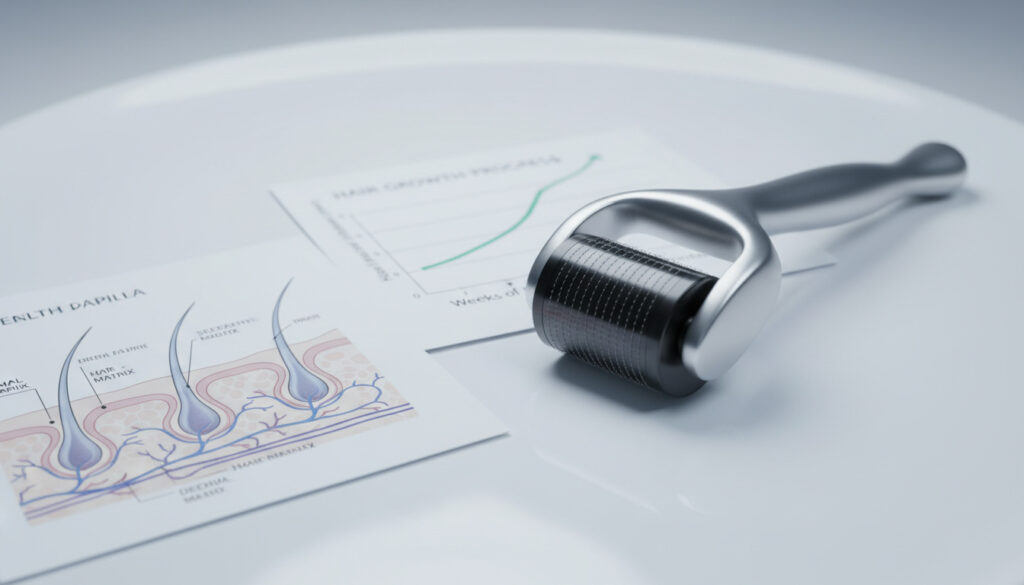
Derma Roller for Hair – Clinical Evidence and Usage Guide
Microneedling devices, commonly called derma rollers, have gained attention as a potential solution for hair thinning and pattern baldness. These handheld tools feature hundreds of tiny needles that create microscopic punctures in the scalp, theoretically triggering the body’s wound-healing response to stimulate follicle activity. Clinical investigations suggest particular efficacy when combined with topical treatments, though the practice demands careful execution to avoid complications.
Recent peer-reviewed studies indicate that controlled micro-injuries may activate hair follicle stem cells and increase platelet-derived growth factors. Research specifically concerning androgenetic alopecia shows promising quantitative results, with combination therapy outperforming standalone pharmaceutical approaches in multiple trials. However, dermatologists emphasize that evidence remains preliminary for certain applications, particularly regarding facial hair and long-term safety profiles.
This analysis examines the empirical evidence supporting scalp microneedling, optimal technical parameters including needle depth and frequency, integration with minoxidil regimens, and documented safety considerations. Understanding these factors helps determine whether this intervention aligns with individual hair restoration goals.
Does a Derma Roller Work for Hair Growth?
Microneedling device for scalp stimulation
Hair thinning, androgenetic alopecia
0.5mm-1.5mm
Promising but limited RCTs
- A 2013 randomized controlled trial demonstrated that combining microneedling with minoxidil produced greater than 50% hair improvement in 82% of participants, compared to 4.5% using minoxidil alone.
- Hair count measurements from the same study showed a fourfold increase in the combination group versus baseline.
- A 2024 systematic review analyzing 13 randomized controlled trials (696 patients) confirmed significant increases in hair density and diameter when microneedling accompanied topical treatments.
- The mechanism involves activating hair follicle stem cells, increasing platelet-derived growth factors, and enhancing blood circulation to follicles.
- Standalone microneedling shows promise but demonstrates substantially lower efficacy than combination approaches with minoxidil, PRP, or low-level laser therapy.
- Professional microneedling treatments consistently outperform at-home roller applications in clinical observations.
- Evidence for beard growth remains limited, though the underlying collagen and circulation mechanisms theoretically apply similarly.
| Parameter | Finding | Source |
|---|---|---|
| 2013 RCT Improvement Rate | 82% (microneedling + minoxidil) vs 4.5% (minoxidil alone) | PMC3746236 |
| Hair Count Increase | 4x higher with combination therapy | Rhute Hair |
| 2024 Review Scope | 13 RCTs, 696 patients | Rhute Hair |
| Study Duration | 12 weeks for peak results | PMC3746236 |
| Effective Needle Depths | Both <1mm and >1mm validated | Rhute Hair |
| Non-Responder Study | New growth after 8-10 sessions in 4 men | Wimpole Clinic |
| FDA Approval Status | Not approved for hair loss as primary treatment | FDA |
| Standalone Efficacy | Less effective than combinations | Healthline |
A randomized controlled trial established that combining weekly microneedling with minoxidil resulted in four times greater hair count increases than pharmaceutical treatment alone after 12 weeks. Hair improvement exceeded 50% in the vast majority of combination therapy participants.
Further validation comes from a 2024 systematic review examining 13 randomized trials encompassing 696 patients, confirming significant improvements in hair density across various needle depths. For female pattern hair loss and alopecia areata, investigations indicate more modest improvements, often requiring adjunctive corticosteroid treatments.
Evidence for beard growth remains limited, though mechanistic analysis suggests collagen and circulation stimulation apply similarly to facial hair. Dermatologists note standalone microneedling demonstrates substantially lower efficacy than combination approaches.
How to Use a Derma Roller for Hair: Step-by-Step
Proper technique determines both safety and efficacy when performing scalp microneedling. The procedure requires sterile equipment, precise needle selection, and consistent timing to minimize tissue damage while maximizing follicular stimulation.
What Size Derma Roller Is Best for Hair?
Clinical guidance distinguishes between three primary needle specifications. Devices measuring 0.5mm accommodate at-home safety profiles while enhancing absorption without deep injury. One-millimeter rollers balance stimulation with acceptable risk, appearing effective in growth studies. One-point-five-millimeter needles serve clinical trial settings achieving significant regrowth but demand professional oversight, rendering them unsuitable for beginners.
Most commercially available rollers measure between 0.25mm and 0.5mm. Consultation with a dermatologist remains essential for determining personalized length requirements, particularly when considering depths exceeding 0.5mm.
How Often Should You Use a Derma Roller on Your Scalp?
Regarding frequency, specialist recommendations indicate that once-weekly application suffices for measurable results, with maximum frequency capped at twice weekly to prevent chronic inflammation. Adequate recovery periods ranging from three to seven days allow micro-injuries to initiate the proliferative phase necessary for growth factor release.
Execute 10-15 passes per section, moving horizontally, vertically, and diagonally across the treatment area to ensure uniform coverage. Perform the procedure only on clean, dry scalp or beard skin. Disinfect the roller both before and after use with appropriate antiseptic solutions.
Derma Roller with Minoxidil: Timing and Best Practices
Combination therapy produces superior clinical outcomes compared to either treatment in isolation. The microneedling process creates microchannels that significantly enhance topical absorption, potentially increasing minoxidil delivery to follicular units.
Application sequencing matters critically. Evidence suggests applying minoxidil immediately following rolling sessions maximizes the open-channel window. This temporal coordination allows the pharmaceutical to penetrate deeper dermal layers than topical application alone permits. Twelve-week trials demonstrate peak results with this sequence.
Sustainable responses have been documented at eight-month follow-up periods when patients maintained consistent weekly protocols. Long-term studies indicate that benefits persist with continued adherence to combination regimens.
Clinical environments utilizing medical-grade devices and sterile technique consistently demonstrate superior outcomes compared to consumer-grade rollers. While home devices provide accessibility, professional microneedling offers enhanced precision and safety monitoring.
Is Derma Rolling Safe for Scalp and Hair? Side Effects
Microneedling constitutes a minimally invasive procedure with generally favorable safety profiles when executed properly. However, the technique introduces specific risks requiring mitigation through rigorous hygiene and technique adherence.
Documented complications include bacterial infection, persistent irritation, bleeding, and scarring—particularly with overuse or improper sterilization. Patients presenting active scalp conditions such as psoriasis, eczema, or open wounds should avoid treatment until resolution.
Device disinfection before and after each use remains non-negotiable. Failure to sterilize rollers properly creates vectors for infection that can damage follicles permanently and compromise scalp health. Avoid sharing devices between individuals.
Medical guidance emphasizes that at-home evidence remains limited, particularly for needle lengths exceeding 1.0mm. Professional oversight becomes essential when utilizing 1.5mm depths or when treating compromised skin barriers.
Dermatologists caution against relying solely on microneedling for androgenetic alopecia management. The intervention lacks FDA approval as a primary hair loss treatment, and most published studies involve small cohort sizes favoring combination approaches rather than standalone validation.
How Long Does It Take to See Results from a Derma Roller?
Treatment timelines vary by individual response patterns, underlying etiology, and adherence to protocol. Clinical observations suggest the following progression:
- Weeks 1-4: Initial inflammatory phase and channel creation. No visible growth occurs during this preparatory period.
- Weeks 8-10: Early responders may notice new growth. Studies document breakthroughs in previous non-responders after 8-10 sessions.
- Week 12: Peak measurable results appear in trial data, with maximum density improvements documented.
- Month 8: Sustainable responses confirmed in follow-up assessments for combination therapy patients.
- Months 3-6: Typical timeframe for visible cosmetic improvement in consumer settings.
Reference timing studies provide additional context for physiological responses. How Long Does Ibuprofen Take to Work demonstrates how biological systems process interventions across different time scales.
What Do We Know for Certain About Derma Rollers?
| Established Evidence | Remaining Uncertainties |
|---|---|
| Microneedling combined with minoxidil produces superior results to minoxidil alone (82% vs 4.5% improvement rates) | Long-term safety profile of unsupervised at-home use beyond 12 months |
| Needle depths of 1.0-1.5mm demonstrate efficacy in controlled trials | Standalone microneedling efficacy versus placebo controls |
| Weekly application frequency proves sufficient for measurable outcomes | Optimal treatment duration protocols beyond initial 12-week cycles |
| Mechanism involves growth factor release and enhanced topical absorption | Beard-specific application protocols and growth timelines |
| Professional treatments outperform consumer-grade devices | Comparative effectiveness against emerging platelet-rich plasma protocols |
Why Microneedling Matters for Hair Loss Treatment
Hair loss interventions traditionally relied on pharmaceutical blockers of dihydrotestosterone or topical vasodilators. Microneedling introduces a mechanical stimulation paradigm that addresses follicular miniaturization through distinct biological pathways. Understanding physiological timing remains crucial across medical disciplines. How Long Does Ibuprofen Take to Work represents a separate pharmacological query, though it illustrates the importance of understanding biological response timelines.
The technique induces controlled trauma, triggering the wound-healing cascade without causing permanent scarring. This cascade releases platelet-derived growth factors and activates dormant follicular stem cells. For individuals experiencing androgenetic alopecia, this mechanical approach offers complementary action to chemical treatments, potentially addressing resistance patterns that occur with monotherapy.
Evaluating baseline health status proves essential before initiating invasive procedures. NHS Blood Pressure Chart by Age and Gender provides context for cardiovascular markers that may influence scalp circulation and overall treatment viability.
What Research and Experts Say About Derma Rolling
Peer-reviewed investigations provide the foundation for current clinical understanding:
Randomized controlled trials demonstrate that microneedling plus minoxidil led to greater than 50% hair improvement in 82% of participants versus 4.5% with minoxidil alone, with hair count increasing fourfold.
— Journal of Cutaneous and Aesthetic Surgery, PMC3746236
Analysis of 13 randomized controlled trials confirms significant increases in hair density and diameter with microneedling plus topicals versus topicals alone, effective across both shallow and deep needle depths.
— 2024 Systematic Review, Rhute Hair Research
Professional microneedling consistently outperforms at-home rollers in clinical outcomes, though consumer devices offer greater accessibility for maintenance protocols.
— Dermatology Clinical Guidelines
Key Takeaways for Considering Derma Rolling
Microneedling presents a scientifically supported adjunct therapy for androgenetic alopecia, particularly when combined with minoxidil using 1.0-1.5mm needles on a weekly basis. However, the procedure requires strict sterilization protocols and realistic expectations regarding the 3-6 month timeline for visible results. Individuals should consult dermatologists before commencing treatment, especially when considering deeper needle penetration. Those monitoring general health indicators may reference an NHS Blood Pressure Chart by Age and Gender as part of a comprehensive wellness assessment.
Common Questions About Derma Rollers for Hair
What is the best derma roller for beard growth?
Evidence for beard-specific efficacy remains limited. Theoretically, 0.5mm to 1.0mm devices should stimulate facial hair via collagen induction and circulation enhancement, though clinical trials focus predominantly on scalp application.
Can I use a 0.25mm derma roller for hair growth?
Devices measuring 0.25mm represent the shallowest available option. While they enhance topical absorption with minimal risk, they may not provide sufficient stimulation to trigger the wound-healing cascade necessary for follicular activation.
Should I wash my hair before derma rolling?
Yes. The procedure requires clean, completely dry scalp skin to minimize bacterial infection risk. Wash with gentle cleanser and dry thoroughly before treatment.
Is derma rolling painful?
Sensation varies by needle depth and individual pain tolerance. 0.5mm devices typically cause mild discomfort, while 1.5mm penetration may require topical anesthetic in clinical settings.
Can women use derma rollers for hair loss?
Yes. Research indicates modest improvements for female pattern hair loss, though studies often involve combination with corticosteroids. The safety profile remains equivalent between genders.
How do I clean my derma roller?
Disinfect before and after each use with isopropyl alcohol (70% or higher). Allow to air dry completely before storage in a clean container. Never share devices.
What should I apply after derma rolling?
Minoxidil application immediately post-rolling maximizes absorption through open microchannels. Avoid other irritants or heavy oils for 24 hours following treatment.
Can derma rolling cause hair shedding initially?
Minor shedding may occur as the follicle cycle resets. This typically resolves within two to three weeks as growth phases activate.
More related posts
 Designer Outlet Cheshire Oaks Directory: Stores, Map & Hours
 Melissa Joan Hart: Career, Family, and Political Views
 What Side Is Your Appendix On? Location, Pain & Signs
 How to Buy Prescription Glasses Online in Ireland: A Safety Guide
 All Creatures Great and Small Cast: Original to Season 6
 Henry Danger: Streaming, Spin-Off, and Key Questions Answered
 Ant Middleton London mayor: Independent candidate for 2028
