Can You Freeze Mushrooms – Step-by-Step Freezing Guide
Mushrooms are a versatile ingredient found in kitchens worldwide, and their perishable nature often leaves home cooks wondering about preservation methods. The question of whether mushrooms can be frozen comes up frequently during harvest seasons, bulk purchases, or when fresh supplies run low. Understanding the correct freezing techniques can make the difference between retaining quality and ending up with a mushy, discolored product.
The short answer is yes—mushrooms do freeze well when handled properly. According to the National Center for Home Food Preservation, vegetables including mushrooms can be successfully frozen, though preparation methods significantly impact the final texture and flavor. Research from multiple culinary sources indicates that blanching or cooking mushrooms before freezing produces superior results compared to freezing them raw.
This guide examines the science behind mushroom freezing, details various preparation methods, and provides practical storage recommendations based on authoritative food preservation sources. Whether dealing with button mushrooms, shiitake, portobello, or wild varieties, the following information applies general principles that help maintain quality during extended freezer storage.
Can You Freeze Mushrooms?
Short Answer
Yes, mushrooms freeze well if prepped properly
Recommended Method
Saute or blanch first for best texture
Storage Duration
10-12 months with optimal quality retention
Texture Note
Some softening is normal after thawing
- Raw freezing leads to mushiness; cooking first prevents this outcome
- Blanching deactivates enzymes that cause discoloration and texture degradation
- Portion mushrooms into bags for easy portion control during cooking
- Label all containers with dates and mushroom variety for proper rotation
- Freeze on baking sheets first (flash freeze) to prevent clumping
- Use airtight freezer bags and remove excess air before storage
- Store at 0°F or below for optimal preservation
| Prep Method | Freezer Life | Best Used For |
|---|---|---|
| Raw | 6 months | Short-term storage, stews |
| Blanched/Steamed | 10-12 months | Texture retention, omelets |
| Sauteed/Cooked | 10-12 months | Direct cooking use, convenience |
How to Freeze Mushrooms Step-by-Step
Selecting and Preparing Fresh Mushrooms
The foundation of successful mushroom freezing begins with selection and preparation. Choose fresh mushrooms that are firm, free from spots, and show no signs of decay. Sorting by size ensures more uniform freezing and consistent cooking times. According to BBC Good Food, cleaning should be done by gently brushing or scrubbing the surfaces rather than soaking, as excess moisture leads to sogginess.
Trim any tough stem ends and slice larger mushrooms (those over one inch in diameter) or quarter them for more manageable pieces. For varieties that will be blanched or steamed, a brief anti-darkening treatment proves beneficial. The National Center for Home Food Preservation recommends dipping mushrooms in a solution of one teaspoon of lemon juice per pint of water for approximately five minutes before proceeding with the chosen freezing method.
Choosing Your Freezing Method
Three primary approaches exist for freezing mushrooms, each with distinct advantages. Raw freezing works adequately but typically produces a spongier texture upon thawing, making it most suitable for incorporation into stews and soups where texture changes go unnoticed. Blanched mushrooms retain color and firmness better, making them ideal for dishes like omelets where visual appeal matters. Sauteed mushrooms offer intense flavor and convenience, ready to add directly to hot dishes without additional preparation.
The Neary Guide notes that morels should never be frozen raw—always cook these varieties first. Button mushrooms are the most forgiving variety and freeze well using any method, while portobello and shiitake respond best to blanching or sauteing due to their denser texture.
The Freezing Process
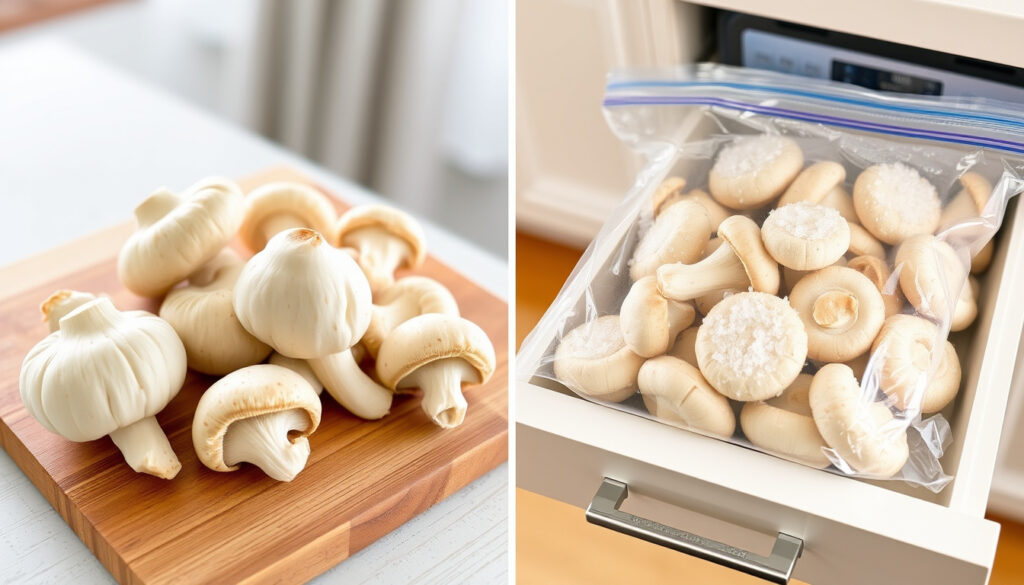
Regardless of the chosen method, the Individual Quick Freeze (IQF) technique prevents mushrooms from clumping together during storage. Spread prepared mushrooms in a single layer on a parchment-lined baking sheet and place in the freezer until completely solid—typically around two hours. Once frozen solid, transfer portions into airtight freezer bags, expel excess air, and label with the variety and date. This flash-freeze step proves essential for maintaining usable pieces rather than a single frozen mass.
For blanched mushrooms, steam blanching preserves color and nutrients most effectively. The National Center for Home Food Preservation specifies steaming whole mushrooms for five minutes, quartered buttons for three and a half minutes, and slices for approximately three minutes. Alternatively, boiling blanching requires two to three minutes in salted water followed by an ice water shock of equal duration before thorough drying.
How Long Do Frozen Mushrooms Last?
Storage Duration and Quality Considerations
Frozen mushrooms remain safe to eat indefinitely from a food safety standpoint, but quality degrades significantly over time. The general consensus among food preservation experts indicates that three to six months represents the optimal storage window for maintaining peak flavor and texture. Mushrooms frozen for up to twelve months remain edible, though noticeable flavor deterioration occurs, and texture may become increasingly soft.
The preparation method influences storage longevity. According to Mushroom.st, steamed or blanched mushrooms tend to last longer than those cooked in fat, as the water-based heating method causes less oxidative change during storage. Vacuum-sealing extends these timelines considerably compared to standard freezer bags, though airtight containers with minimal headspace work well for most home users.
Preventing Freezer Burn
Freezer burn results from dehydration and oxidation when mushrooms encounter air inside storage containers. Prevention centers on minimizing air exposure—use quality freezer bags designed for long-term storage, squeeze out excess air before sealing, and consider vacuum-sealing if available. Flattening mushrooms into single layers within bags maximizes surface area while conserving freezer space and ensures more rapid freezing, which protects cellular structure.
Maintaining consistent freezer temperature at zero degrees Fahrenheit or below proves critical. Frequent temperature fluctuations from door opening and closing accelerate quality loss. The USDA Food Safety guidelines emphasize that proper packaging and temperature control are the two factors most within a home cook’s control when preserving food quality.
Mushrooms that appear gray, have ice crystals packed densely against them, or emit an off smell should be discarded. Slight softening is expected, but mushiness to the point of falling apart indicates past-prime storage conditions. For tips on recognizing when frozen foods remain safe to use, consult USDA freezing food safety resources.
Thawing Frozen Mushrooms
The high water content of mushrooms makes thawing methodology crucial for quality retention. Partial thawing in the refrigerator over several hours works adequately, though many sources recommend adding mushrooms directly to hot dishes from frozen. Cooking from frozen prevents the excessive moisture release that leads to a mushy, waterlogged texture.
Soups, stews, and sauteed dishes particularly benefit from adding frozen mushrooms directly without thawing. The Kudos Kitchen by Renee notes that this approach works especially well for previously sauteed mushrooms, which can be dropped into a hot skillet with minimal additional cooking time. If full thawing becomes necessary, use the refrigerator and consume within a day or two. For the best results when cooking with frozen mushrooms, consider Frys in svamp för framtiden.
Step-by-Step Freezing Process
- Select and inspect – Choose firm, spot-free mushrooms; sort by size for uniform processing.
- Clean gently – Brush or scrub surfaces; avoid soaking in water to prevent excess moisture absorption.
- Prepare the pieces – Trim stems, slice larger mushrooms, or quarter as appropriate for planned use.
- Apply anti-darkening treatment (optional) – Dip in lemon water solution for five minutes if blanching or steaming.
- Blanch or saute – Steam for three to five minutes or saute in butter/oil until lightly cooked, approximately four to five minutes without salt.
- Cool rapidly – Spread on clean paper towels or baking sheets to reach room temperature quickly.
- Flash freeze – Arrange in single layer on parchment-lined baking sheet; freeze until solid, about two hours.
- Package properly – Transfer to airtight freezer bags, expel air, flatten into single layer, and label with variety and date.
What Science Says About Freezing Mushrooms
Established Facts
- Freezing preserves most nutritional value (vitamins and minerals)
- Enzyme activity causes texture degradation and discoloration
- Blanching/sauteing inactivates these enzymes
- Raw freezing results in slightly reduced nutritional value
- Proper packaging prevents freezer burn
- USDA guidelines recommend steaming or pan-heating before freezing
Uncertain or Variable Factors
- Exact texture after thawing varies by mushroom variety
- Nutrient loss percentages not precisely quantified in available research
- Wild mushroom freezing characteristics less documented than cultivated varieties
- Optimal fat-freezing methods debated among experts
- Specific shelf life beyond one year varies by preparation method
Understanding Mushroom Variety Differences
Different mushroom varieties respond to freezing in distinct ways. Button mushrooms (cremini and white) prove the most versatile, freezing well using any method—whether raw, blanched, or cooked. Their relatively firm texture holds up better through the freeze-thaw process compared to more delicate varieties. Shiitake mushrooms follow similar general guidelines, though their denser flesh benefits particularly from blanching or cooking before freezing.
Portobello mushrooms, given their larger size and meatier texture, respond best to slicing followed by blanching or sauteing. The National Center for Home Food Preservation recommends treating portobellos as large mushrooms and applying standard size-based timing adjustments. Wild varieties including porcini, chanterelles, and oyster mushrooms can generally be frozen using the same principles, though they may exhibit more variation in results. Morels should always be cooked before freezing, never frozen raw.
The Forager Chef notes that wild mushroom enthusiasts often prefer sauteing or sous vide cooking for freezer preparation, as these methods preserve the distinctive flavors that make wild varieties desirable. A sous vide approach involves seasoning, cooking at 165°F for two hours with herbs and butter, chilling, then freezing—though this represents a more advanced technique suited to specialty applications.
Expert Guidance on Mushroom Preservation
“Most vegetables, including mushrooms, benefit from blanching or heating before freezing. This process helps preserve color, texture, and nutritional value by deactivating enzymes that cause degradation during storage.”
— USDA National Center for Home Food Preservation
“Steaming before freezing is considered superior to fat-cooking methods for longevity, as water-based heating causes less oxidative change during storage.”
— Mushroom.st Preservation Guide
The expert consensus emphasizes that while mushrooms can technically be frozen raw, the quality sacrifice rarely justifies the convenience savings. Investment in proper preparation—whether blanching, steaming, or sauteing—yields significantly better results in terms of texture retention, flavor preservation, and overall culinary utility.
Summary: Freezing Mushrooms Effectively
Mushrooms absolutely can be frozen, and doing so represents an effective preservation method when executed correctly. The key takeaway is that preparation method matters enormously—blanching or cooking mushrooms before freezing produces superior results compared to raw freezing, primarily due to enzyme deactivation that prevents the mushiness and discoloration that plague improperly prepared frozen mushrooms.
Storage at zero degrees Fahrenheit or below in airtight packaging maintains quality for approximately three to six months optimally, though blanched and steamed varieties may remain acceptable for up to twelve months. Thawing directly in hot dishes or with minimal refrigerator time prevents the excessive moisture release that leads to undesirable texture. Labeling containers with variety and date ensures proper rotation and helps maintain quality throughout storage.
For related information on how temperature and timing affect other common household medications, see the guide How Long Does Ibuprofen Take to Work – Onset Times, Factors and Tips.
Frequently Asked Questions
Do mushrooms freeze well?
Yes, mushrooms freeze well when properly prepared. Blanched or cooked mushrooms retain better texture and flavor than raw frozen mushrooms, with optimal quality lasting three to six months in the freezer.
Should you blanch mushrooms before freezing?
The National Center for Home Food Preservation recommends blanching or heating mushrooms before freezing to deactivate enzymes that cause texture degradation and discoloration.
Can you freeze raw mushrooms?
Raw mushrooms can be frozen, but the result tends toward a spongy or mushy texture upon thawing. This method works best for stews and soups where texture changes are less noticeable. For more information on proper preparation, consult BBC Good Food freezing guides.
How do you thaw frozen mushrooms?
For best results, add frozen mushrooms directly to hot dishes rather than thawing fully. If thawing is necessary, place in the refrigerator briefly and use within one to two days. Cooking directly from frozen prevents excessive moisture release.
Do frozen mushrooms get mushy?
Some texture softening is normal when freezing mushrooms. However, excessive mushiness typically indicates improper preparation (such as soaking during cleaning) or freezing raw without cooking first. Blanching or cooking before freezing significantly reduces mushiness.
What is the best way to store frozen mushrooms?
Use airtight freezer bags or vacuum-sealed containers. Remove excess air, flatten into single layers, and store at zero degrees Fahrenheit or below. Always label with the variety and freezing date for proper rotation.
How long do frozen mushrooms last?
Frozen mushrooms remain safe indefinitely from a food safety perspective but maintain optimal quality for three to six months. Blanched or steamed varieties may retain acceptable quality for up to twelve months. Beyond this timeframe, flavor and texture noticeably decline.
Can you freeze portobello mushrooms?
Portobello mushrooms freeze well when sliced and either blanched or sauteed first. Their larger size and denser texture benefit particularly from cooking before freezing, which helps maintain better structure during storage and thawing.
How Long Does Ibuprofen Take to Work – Onset by Dose and Form
For readers interested in how timing and dosage forms affect absorption for other common household items, the guide How Long Does Ibuprofen Take to Work – Onset by Dose and Form provides detailed information.
More related posts
 Remco Evenepoel: Football Exit, Crash, Team Move & Salary
 Kieran Culkin: Family, Kids, and Home Alone
 Cast of The Full Monty: 1997 Original and 2023 TV Series
 Shirley MacLaine: Biography, Relationships, Net Worth, and Career
 All Creatures Great and Small Cast: Original to Season 6
 Warren Jeffs: Life Sentence, Crimes, and Prison Status
 The Fantastic Four: First Steps: Cast, Release, MCU Guide
 Sport Direct Trafford Centre: Location, Hour & Stock Check
