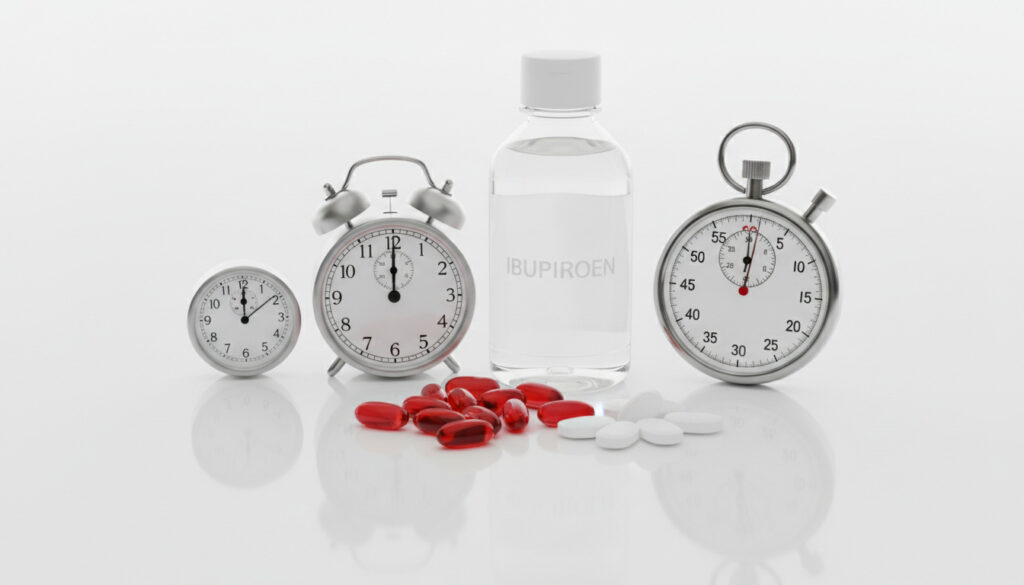
How Long Does Ibuprofen Take to Work – Onset by Dose and Form
Ibuprofen stands among the most frequently utilized nonsteroidal anti-inflammatory drugs worldwide, yet the interval between ingestion and perceptible relief varies considerably based on pharmaceutical formulation and physiological factors. While many users expect immediate results, the compound must first undergo gastric dissolution, intestinal absorption, and distribution to target tissues before therapeutic effects manifest.
Pharmacokinetic investigations demonstrate that ibuprofen is rapidly absorbed following oral administration, with peak serum concentrations typically developing within one to two hours for conventional tablets. However, subjective pain relief often commences prior to peak plasma levels, creating variability in user-reported onset times.
Understanding these temporal dynamics requires examination of dosage strengths, chemical formulations, and environmental factors such as food intake, each of which modifies the speed at which the medication reaches systemic circulation.
How Long Does Ibuprofen Take to Kick In?
The onset of analgesic action depends primarily on the rate of gastric emptying and intestinal absorption, which differ significantly between product formulations. Standard ibuprofen tablets achieve peak plasma concentrations (Cmax) at approximately 1.25 hours post-dose, though initial therapeutic effects typically emerge earlier.
- Standard tablets reach Tmax in 1.25 hours, while fast-acting formulations achieve this in 0.42 hours
- Rapidly disintegrating tablets demonstrate detectable plasma levels within 3–10 minutes
- COX-2 inhibition peaks between 0.67–2 hours depending on chemical preparation
- Food intake delays absorption by a median of 25 minutes
- Therapeutic concentration range (10–50 mg/L) correlates with clinical efficacy
- Enteric-coated formulations exhibit delayed onset with Tmax of 1.83 hours
| Dose/Formulation | Onset Time | Peak (Tmax) | Duration |
|---|---|---|---|
| 200 mg standard tablet | 30–60 minutes | 1–2 hours | 4–6 hours |
| 400 mg standard tablet | 20–30 minutes | 1–2 hours | 6 hours |
| 800 mg prescription tablet | 30 minutes | 2 hours | 6–8 hours |
| Ibuprofen arginine (fast-acting) | 15–25 minutes | 0.42 hours | 4–6 hours |
| Solubilized capsule | 15–30 minutes | 0.5 hours | 4–6 hours |
| Rapidly disintegrating tablet | 3–10 minutes (initial) | 1.38 hours | 4–6 hours |
| Enteric-coated tablet | 45–60 minutes | 1.83 hours | 6–8 hours |
How Long Does Ibuprofen Last?
The duration of therapeutic action connects directly to ibuprofen’s elimination kinetics. The compound exhibits a plasma half-life of approximately 1.8–2 hours, necessitating frequent administration to maintain consistent anti-inflammatory or analgesic effects.
Plasma Half-Life and Redosing
With a half-life ranging between one and three hours, ibuprofen concentrations diminish rapidly, explaining the standard recommendation for administration every four to six hours. Pharmacokinetic parameters remain comparable regardless of twice-daily or thrice-daily regimens, though systemic exposure increases approximately 1.4-fold with more frequent dosing.
Therapeutic Window
Clinical efficacy generally persists for four to six hours following standard doses, though higher prescription strengths (800 mg) may extend relief to six or eight hours. The therapeutic concentration range of 10–50 mg/L provides the pharmacological basis for these dosing intervals.
Maintenance of plasma levels between 10–50 mg/L correlates with optimal anti-inflammatory, analgesic, and antipyretic effects. Dropping below this threshold typically coincides with the return of symptoms.
How Long for Specific Doses and Conditions?
While pharmacokinetic data provides general timelines, the relationship between specific milligram strengths and clinical conditions involves additional variables. The research focuses primarily on plasma concentrations rather than condition-specific symptom resolution times.
Over-the-Counter Dosing (200–400 mg)
Standard analgesic doses of 200–400 mg demonstrate onset times between 20 and 60 minutes, with 400 mg formulations achieving peak inhibition of COX-2 enzymes within two hours. Lower doses may require the full 60-minute window before subjective relief becomes apparent.
Prescription Strength (800 mg)
Higher doses do not necessarily accelerate onset but extend duration. The 800 mg formulation reaches peak concentration at approximately two hours, providing extended therapeutic coverage for inflammatory conditions, though initial relief follows similar timelines to lower doses.
Specific Clinical Applications
The pharmacokinetic literature does not establish distinct onset times for specific pain etiologies such as toothache, menstrual cramps, or headache. Ibuprofen accumulates in synovial fluid, the proposed site of action for inflamed joints, suggesting that localized tissue penetration may influence perceived onset in arthritic conditions versus systemic pain.
Comprehensive pharmacokinetic data for pediatric populations, including specific onset times for children’s formulations, remains limited in the available research. Caregivers should consult pediatric-specific guidelines rather than extrapolating from adult timelines.
What Factors Affect Ibuprofen Onset Time?
Multiple variables modify the speed of absorption and subsequent clinical effect, creating significant inter-individual variability in user experience.
Pharmaceutical Formulation
Fast-acting formulations utilizing ibuprofen arginine achieve Tmax in 0.42 hours compared to 1.25 hours for standard tablets. Rapidly disintegrating tablets produce detectable plasma concentrations within 3–10 minutes, suggesting initial absorption through oral mucosal tissues, while enteric-coated preparations intentionally delay release to protect gastric mucosa.
Gastric Contents and pH
Administration with food delays absorption by a median of 25 minutes, though total bioavailability remains unchanged. Acidic gastric environments facilitate dissolution of the free acid form, while concurrent antacid use may theoretically alter dissolution rates.
Physiological Considerations
Ibuprofen exhibits a low apparent volume of distribution (0.1–0.2 L/kg) due to high plasma protein binding. Individual variation in gastric emptying time, hepatic blood flow, and albumin levels may account for the observed variability in onset times among patients.
Taking standard ibuprofen on an empty stomach accelerates onset by approximately 25 minutes compared to postprandial administration. However, this approach increases gastrointestinal irritation risk and should be balanced against individual gastric tolerance.
Ibuprofen vs Other Pain Relievers: Speed Comparison
Comparative data between analgesic classes reveals important distinctions in temporal profiles. When combined with paracetamol in fixed-dose tablets, pharmacokinetic parameters remain bioequivalent to monotherapy, though paracetamol absorption accelerates slightly in combination (Tmax 30 minutes versus 40 minutes for monotherapy).
Unlike Codeine Phosphate 30mg – Uses, Dosage & Side Effects, which operates through opioid receptors and carries distinct onset characteristics, ibuprofen’s mechanism depends on prostaglandin synthesis inhibition, requiring time for enzymatic blockade and subsequent reduction of inflammatory mediators.
Acetaminophen (paracetamol) generally demonstrates comparable or slightly faster absorption times depending on formulation, though the two medications differ fundamentally in their sites of action—acetaminophen primarily affecting central prostaglandin synthesis while ibuprofen acts peripherally.
The Absorption Timeline: From Ingestion to Relief
The journey from oral administration to clinical efficacy follows a predictable sequence, though timing varies by formulation:
- 0–10 minutes: Rapidly disintegrating tablets demonstrate initial mucosal absorption; standard tablets begin gastric dissolution.
- 10–30 minutes: Intestinal absorption commences; solubilized and arginine formulations show accelerated uptake.
- 30–60 minutes: Subjective pain relief typically reported as plasma concentrations approach therapeutic thresholds.
- 60–120 minutes: Peak plasma concentration (Tmax) achieved for standard formulations; maximal COX-2 inhibition documented.
- 2–4 hours: Sustained anti-inflammatory effects as tissue penetration, including synovial fluid accumulation, reaches equilibrium.
- 4–6 hours: Plasma concentrations decline toward baseline; therapeutic effects wane; redosing typically required.
How Reliable Is the Onset Time?
While population pharmacokinetics establish general timelines, individual experience varies significantly based on uncontrolled physiological variables.
Established Parameters
- Standard tablet Tmax: 1–2 hours
- Food-induced delay: ~25 minutes median
- Fast-acting formulation Tmax: 0.42–0.5 hours
- Half-life: 1.8–2 hours
- Therapeutic range: 10–50 mg/L
Remaining Uncertainties
- Individual genetic variation in cytochrome P450 metabolism
- Precise onset times for specific pain etiologies (dental, menstrual, headache)
- Pediatric-specific absorption rates for all age groups
- Impact of severe renal impairment on onset timing
- Variability in synovial fluid penetration rates between joints
The Pharmacological Context
Ibuprofen’s clinical utility stems from its ability to inhibit cyclooxygenase enzymes, thereby reducing prostaglandin synthesis at sites of inflammation. Despite low volume of distribution, the compound penetrates the central nervous system and accumulates in synovial fluid, explaining its efficacy for both systemic pain and localized inflammatory conditions.
The drug’s short half-life necessitates frequent dosing to maintain therapeutic concentrations, a pharmacokinetic limitation that formulation innovations (arginine salts, solubilized preparations) attempt to circumvent through accelerated absorption rather than prolonged elimination. Understanding these mechanistic details contextualizes why “fast-acting” claims refer to absorption speed rather than biological half-life extension.
Sources and Clinical Evidence
Ibuprofen is rapidly absorbed following oral administration, with peak serum concentrations typically occurring 1–2 hours after dosing. The drug exhibits a low apparent volume of distribution of approximately 0.1–0.2 L/kg, consistent with its high degree of plasma protein binding to albumin.
— Pharmacokinetic analysis, PMC Clinical Pharmacokinetics Review
Maximum inhibitory effects on COX-2 occur at median times of 0.67–2 hours depending on formulation, with fast-acting preparations demonstrating more predominant activity compared to standard tablets.
— Comparative Formulation Study, PMC
Summary
Ibuprofen typically begins relieving pain within 20 to 60 minutes of oral administration, reaching peak plasma concentrations between one and two hours for standard formulations. Fast-acting alternatives utilizing arginine or solubilized preparations accelerate this timeline to 15–30 minutes, while enteric-coated versions delay onset to protect gastrointestinal tissue. Effects generally persist for four to six hours, dictated by the drug’s two-hour half-life. For individuals monitoring cardiovascular parameters alongside pain management, the NHS Blood Pressure Chart by Age and Gender – 2024 UK Guidelines provides relevant clinical context for comprehensive health monitoring.
Frequently Asked Questions
How long does ibuprofen take to reduce fever?
Antipyretic effects generally follow the same timeline as analgesic effects, with onset within 30–60 minutes and peak reduction occurring as plasma concentrations reach therapeutic levels (10–50 mg/L) within 1–2 hours.
How long before bed can I take ibuprofen?
Given the 4–6 hour duration of action, taking ibuprofen 30–60 minutes before sleep allows sufficient time for onset while providing overnight coverage for pain or inflammation.
Does children’s ibuprofen work faster?
Specific pediatric pharmacokinetic studies were not detailed in the available research. Liquid formulations may demonstrate faster absorption than tablets due to pre-dissolved state, but individual pediatric metabolism varies significantly.
Can I take ibuprofen with food?
Yes, though food delays absorption by approximately 25 minutes. Taking ibuprofen with meals reduces gastrointestinal irritation without affecting total drug bioavailability.
What if ibuprofen doesn’t work after 1 hour?
If no relief occurs within 60 minutes, consider whether a fast-acting formulation was used and whether the dose was adequate for the pain severity. Persistent lack of response may indicate a condition requiring alternative therapy or medical evaluation.
Is liquid ibuprofen faster than pills?
Solubilized capsules and liquid suspensions generally achieve peak concentrations faster (approximately 30 minutes) than standard tablets due to eliminated dissolution time, similar to fast-acting tablet formulations.
More related posts
 Anne Boleyn: Why Was She Executed? Last Words, Legacy & Facts
 Gemma Bissix: Biography, EastEnders, Hollyoaks & Personal Life
 Sheena Easton Now: What Happened to the 80s Pop Star
 Sally Phillips: Biography, Family, Religion, and Film Career
 What Is 6 7? Viral TikTok Slang Meaning Explained
 New Toyota Land Cruiser: Price & Specs Ireland 2025
 Michael Owen: Ballon d’Or Winner, Pundit, and Breeder
 Cast of Terminator 2: Full List, Roles & Where They Are Now
