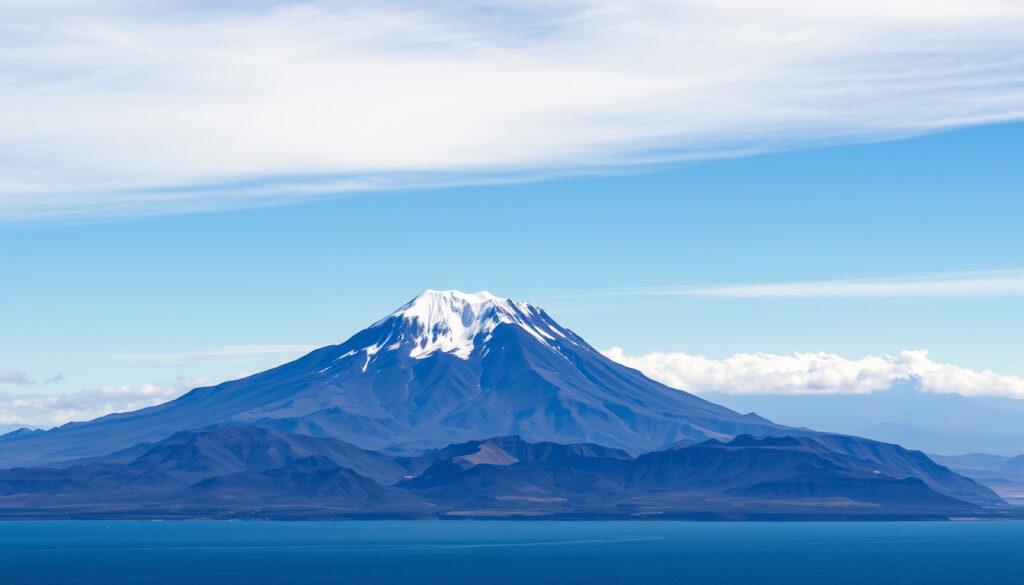
Highest Mountain in the World: Everest, Mauna Kea & More
Ask someone to name the highest mountain in the world, and almost everyone says Mount Everest. But the real answer shifts depending on how you measure — by elevation above sea level, from base to summit, or even distance from Earth’s center.
Mount Everest height (above sea level): 8,848.86 m (29,031.7 ft) · Mauna Kea height from base: 10,210 m (33,500 ft) · Chimborazo distance from Earth’s center: 6,384.4 km (3,967.1 mi) · Number of 8,000‑meter peaks: 14 · Highest unclimbed mountain: Gangkhar Puensum (7,570 m) · Tallest mountain in the solar system: Olympus Mons (21.9 km)
Quick snapshot
- Mount Everest – 8,848.86 m (29,031.7 ft) above sea level (NOAA Ocean Service)
- Standard measure used by mountaineers and governments (NOAA Ocean Service)
- Mauna Kea – over 10,210 m (33,500 ft) from ocean floor (Geology.com)
- Most of its base is underwater (Geology.com)
- Chimborazo – 6,384.4 km from Earth’s center (NOAA Ocean Service)
- Earth’s equatorial bulge gives it the advantage (NOAA Ocean Service)
- Olympus Mons (Mars) – 21.9 km (13.6 mi) (NOAA Ocean Service)
- More than double Everest’s base‑to‑peak height (NOAA Ocean Service)
The differing definitions yield distinct titleholders:
| Attribute | Value |
|---|---|
| Highest point above sea level | Mount Everest, 8,848.86 m (29,031.7 ft) |
| Tallest mountain from base to summit | Mauna Kea, 10,210 m (33,500 ft) |
| Farthest point from Earth’s center | Chimborazo, 6,384.4 km (3,967.1 mi) |
| Number of 8,000‑meter peaks | 14 |
| Highest unclimbed mountain | Gangkhar Puensum, 7,570 m (24,836 ft) |
| Most recent height measurement of Everest | 2020 (China‑Nepal joint survey) |
What is technically the tallest mountain?
The answer hinges on which yardstick you pick. Let’s walk through the three main contenders.
What is technically the largest mountain on Earth?
- By elevation above sea level, Mount Everest, at 8,848.86 m (29,031.7 ft), takes the title (NOAA Ocean Service).
- This is the standard definition used by mountaineering organisations and national governments.
What is the highest mountain in the world from base?
- Mauna Kea in Hawai‘i rises more than 10,210 m (33,500 ft) from its base on the ocean floor to its summit (Geology.com).
- Because most of its bulk is submerged, only about 4,200 m is visible above sea level.
What is the farthest point from Earth’s center?
- Chimborazo in Ecuador reaches 6,384.4 km from Earth’s centre — about 2,072 m farther than Everest’s summit.
- The equatorial bulge pushes Chimborazo’s peak outward even though its elevation above sea level (6,268 m) is far lower.
“Mount Everest is best described as the highest mountain in the world in terms of elevation.”
Britannica
A mountaineer who wants the highest altitude should aim for Everest; someone chasing the greatest vertical rise from base would head to Mauna Kea; and a surveyor looking for the point furthest from Earth’s core would pick Chimborazo. The “tallest” mountain depends entirely on context.
What are the top 10 tallest mountains?
When measured by elevation above sea level, the top ten are all “eight‑thousanders” — peaks above 8,000 m — and they cluster in the Himalayas and Karakoram ranges.
| Rank | Mountain | Height (m) | Height (ft) | Range |
|---|---|---|---|---|
| 1 | Mount Everest | 8,848.86 | 29,031.7 | Himalayas |
| 2 | K2 | 8,611 | 28,251 | Karakoram |
| 3 | Kangchenjunga | 8,586 | 28,169 | Himalayas |
| 4 | Lhotse | 8,516 | 27,940 | Himalayas |
| 5 | Makalu | 8,485 | 27,838 | Himalayas |
| 6 | Cho Oyu | 8,188 | 26,864 | Himalayas |
| 7 | Dhaulagiri I | 8,167 | 26,795 | Himalayas |
| 8 | Manaslu | 8,163 | 26,781 | Himalayas |
| 9 | Nanga Parbat | 8,126 | 26,660 | Himalayas |
| 10 | Annapurna I | 8,091 | 26,545 | Himalayas |
Data compiled from Nepal Hiking Team and Much Better Adventures.
Is K2 the highest peak in the world?
- No. K2 is the second‑highest at 8,611 m.
- It is often considered a harder climb than Everest due to its steep terrain and unpredictable weather.
What is the second highest mountain in the world?
- K2, also known as Mount Godwin‑Austen, at 8,611 m.
What are the 7 highest mountains in the world?
- The top seven are Everest, K2, Kangchenjunga, Lhotse, Makalu, Cho Oyu, and Dhaulagiri I — all above 8,100 m.
Every one of the top ten peaks stands above 8,000 m, but only Everest enjoys a clear margin of about 237 m over K2. Below that the gaps shrink, and a few metres of snow depth can sometimes shift rankings.
What’s taller than Mount Everest?
Once you leave the definition of “above sea level,” several mountains surpass Everest in different ways.
What is 3 times taller than Mount Everest?
- Olympus Mons on Mars is about 21.9 km high — roughly 2.5 times Everest’s base‑to‑peak height (NASA).
- It is a shield volcano with a base diameter of roughly 600 km.
What is the highest mountain in the world underwater?
- No entirely submarine mountain exceeds Mauna Kea’s full height, because Mauna Kea itself has two‑thirds of its mass below the Pacific Ocean.
- Seamounts such as Mauna Loa and Pūhāhonu are massive but do not break the 10 km vertical relief mark.
Here’s how the contenders compare across measurement systems:
| Mountain | Elevation (m) | Base‑to‑Summit (m) | Distance from centre (km) | Planet |
|---|---|---|---|---|
| Mount Everest | 8,848.86 | ~8,849 | ~6,382.3 | Earth |
| Mauna Kea | 4,207 | 10,210 | ~6,384.1 | Earth |
| Chimborazo | 6,268 | ~6,268 | 6,384.4 | Earth |
| Olympus Mons | 21,900 | 21,900 | ~3,390 | Mars |
Sources: Geology.com; NASA.
“Fourteen mountain peaks on Earth stand taller than 8,000 meters; the tallest is Mount Everest.”
NASA Earth Observatory
Everest remains the highest above sea level, but anyone fixated on “tallest” should remember that Mauna Kea already claims that crown by a different rule — and Olympus Mons puts Earth’s peaks to shame on a planetary scale.
Why can’t you climb Mount Everest after 2pm?
The “2 PM rule” is a safety measure that expedition operators enforce on the mountain. Let’s look at the reasons and a related aviation question.
What is the 2 PM Rule on Everest?
- Climbers must turn around by 2 p.m. regardless of their position, to avoid descending in darkness or encountering dangerous afternoon storms.
- Operators enforce it strictly because fatal accidents spike when climbers ignore turnaround times.
Why can’t planes fly over Mount Everest?
- Standard commercial routes avoid the area due to severe turbulence, high winds, and the lack of emergency landing options.
- Oxygen levels at cruising altitude are also too low for rapid descent procedures.
The 2 PM rule has saved lives, but it also means some climbers must accept failure only a few hundred metres from the top. For airlines, Everest remains a strictly no‑fly zone — a decision driven by physics, not regulation.
What mountain is forbidden to climb?
A handful of peaks are legally or culturally off‑limits. Here are two of the most notable.
Which mountain is forbidden to climb?
- Mount Kailash in Tibet is considered sacred in Buddhism, Hinduism, Jainism, and Bön; climbing is prohibited (Wikipedia).
- Gangkhar Puensum in Bhutan is the highest unclimbed mountain at 7,570 m, and Bhutan has banned climbs above 6,000 m for cultural and environmental reasons (Wikipedia).
Highest unclimbed mountain – Wikipedia
- Gangkhar Puensum remains the highest unclimbed peak on Earth, without a recorded successful ascent.
- Several other peaks in remote parts of Tibet and Nepal also remain untouched, but none as high.
“Mount Everest’s peak is the highest altitude above mean sea level at 29,029 feet.”
NOAA Ocean Service
These protections reflect cultural and environmental priorities that override climbing ambitions.
Clarity check
Confirmed facts
- Mount Everest’s elevation is 8,848.86 m (2020 agreement).
- Mauna Kea’s height from base to summit is over 10,000 m (USGS data via Geology.com).
- Chimborazo’s summit is the farthest point from Earth’s center (Wikipedia).
What’s unclear
- Exact height of some peaks can vary by a few metres due to snow depth and measurement techniques.
- The precise base depth of Mauna Kea is debated; the accepted figure is around 4,500 m below sea level.
- The exact base-to-summit height of Mauna Kea is sometimes rounded to 10,000 m, with variations in accepted measurements.
For related mathematical concepts, see Area of a Circle – Formula and Step-by-Step Examples. Understanding definitions is central to scientific inquiry; see What Is a Hypothesis – Definition, Types, Examples.
The discrepancies highlight the importance of understanding measurement context.
While Everest is the highest above sea level, the tallest mountain in the world title actually belongs to Mauna Kea when measured from its base on the ocean floor.
Frequently asked questions
How tall is Mount Everest?
Mount Everest’s summit is 8,848.86 m (29,031.7 ft) above sea level, as agreed by China and Nepal in 2020 (Geology.com).
How was the height of Everest measured?
The 2020 joint survey used GPS, ground‑penetrating radar, and gravity measurements to settle the precise elevation.
Who first climbed Mount Everest?
Sir Edmund Hillary (New Zealand) and Tenzing Norgay (Nepal) reached the summit on 29 May 1953.
Is Mount Everest growing taller?
Yes. The Indian tectonic plate continues to push into the Eurasian plate, lifting the Himalayas by a few millimetres each year. The 2020 measurement already accounts for this.
How long does it take to climb Everest?
A typical expedition lasts about two months, including acclimatisation rotations and weather windows. The summit push itself takes roughly 7–9 days from Base Camp.
How many people climb Everest each year?
In recent years, around 800–1,000 climbers have attempted the summit per season, with roughly 600 to 700 reaching the top.
What is the death zone on Everest?
Above 8,000 m, the oxygen level is so low that the human body begins to deteriorate. Most fatalities occur in this zone, often during the descent.
Can helicopters land on top of Everest?
Yes, but extremely rarely. In 2005 Didier Delsalle landed a Eurocopter on the summit and held it for about four minutes. The altitude and thin air make it technically challenging and dangerous.
For anyone wondering which peak really is the highest mountain in the world, the honest answer is three different ones. Climbers chasing altitude will keep turning to Everest; geophysicists and geography enthusiasts will point to Chimborazo and Mauna Kea. The implication for the curious reader is clear: ask for the definition before you ask for the name — or risk getting a correct answer that doesn’t match the question.
More related posts
 Remco Evenepoel: Football Exit, Crash, Team Move & Salary
 How Many Halloween Movies Are There – Full List of 13 Films
 Sonic the Hedgehog 2020: Cast, Streaming, and Sequels Answered
 How Old Is David Attenborough – Age, Birthday, Family Facts
 Who Was Charlie Kirk? Death and Legacy of a Conservative Activist
 167 Cm In Feet – Exact 5′ 5.75″ Conversion And Comparisons
 Wallis Simpson: Queen Elizabeth, Funeral, Baby & Fortune
 Cast of Crazy Rich Asians – Full List and Key Roles
