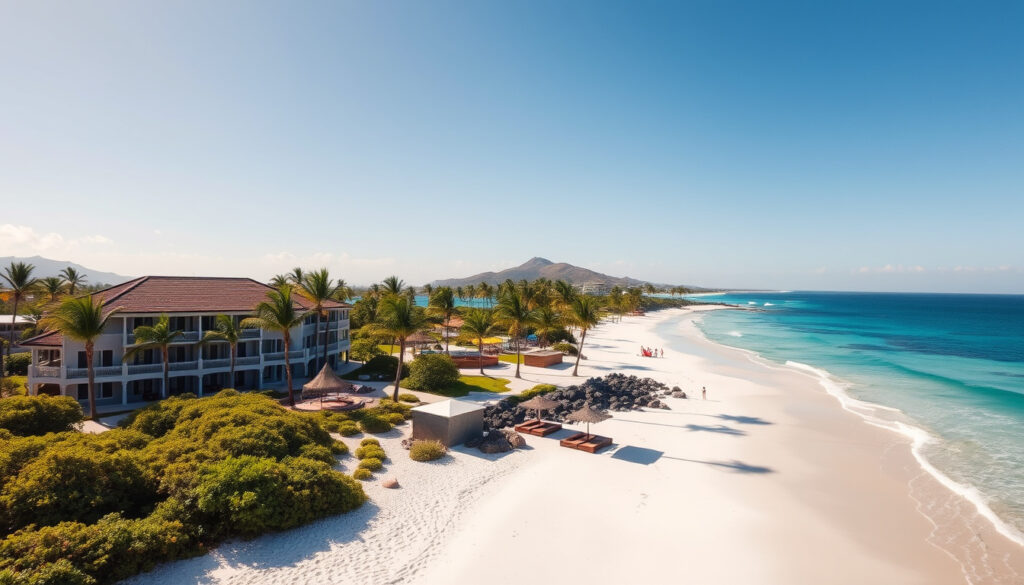
Cape Verde Holidays Guide: Best Times to Visit & Top Resorts
There’s a small archipelago in the Atlantic where the beach photos are real and the winter sun is just a direct six-hour flight from the UK. Cape Verde’s ten islands line up off West Africa, yet most holidaymakers only ever see two of them — Sal and Boa Vista. The real planning questions are which island, which week, and what the official safety advice says before you book.
Population: 561,900 (BBC country profile) ·
Area: 4,033 sq km ·
Capital: Praia ·
Main holiday islands: Sal and Boa Vista ·
UK flight time: about 6 hours direct ·
Time zone: UTC-1 (Cape Verde Time)
Quick snapshot
- Cabo Verde holds a Level 1 advisory — “exercise normal precautions” — from the U.S. Department of State travel advisory.
- Sal and Boa Vista are the main holiday islands for UK package trips; the capital, Praia, sits on Santiago. (BBC country profile) (U.S. Department of State travel advisory)
- These three islands effectively cover the reasons to visit: beaches, dunes, and culture. (U.S. Department of State travel advisory)
- Which hotel currently has food-poisoning reports — the pattern changes by season, so no single resort is a permanent red flag. (UK Foreign Office travel advice) (Cape Verde consular portal)
- Exactly how hot the “hottest month” gets varies by island and year; August to October is the reliable warmest window. (Cape Verde weather statistics) (Cape Verde consular portal)
- Visa rules depend on nationality and current policy, so the Cape Verde consular portal is the final authority.
- November to June is the dry, less humid window most holidaymakers prefer. (Cape Verde climate data)
- August to October brings the highest heat, humidity and the wetter season. (UK Foreign Office)
- If your dates are flexible, June and November often pair warm days with lower humidity than the summer peak.
- Check the UK Foreign, Commonwealth & Development Office travel advice before booking; it covers entry, health and insurance, and it notes that GHIC cards are not accepted in Cape Verde.
- Pre-register online up to five days before travel and pay the Airport Security Fee through the Cape Verde consular portal.
- Decide on the island trade-off early: busier Sal or quieter Boa Vista. (Package holiday operator comparisons) (UK Foreign, Commonwealth & Development Office travel advice)
Seven facts, one pattern: Cape Verde is compact in area but scattered across islands, so distances feel larger than the map suggests. The figures below draw on the BBC country profile and Cape Verde’s official consular portal.
| Fact | Detail |
|---|---|
| Official name | Republic of Cabo Verde |
| Capital | Praia |
| Area | 4,033 sq km |
| Population | 561,900 (BBC country profile, 2023) |
| Main holiday islands | Sal, Boa Vista, Santiago |
| Time zone | UTC-1 (Cape Verde Time) |
| Currency | Cape Verdean escudo (CVE) |
Is Cape Verde good for a holiday?
Strip away the marketing and Cape Verde answers a simple question: do you want a warm, dry beach holiday with a real country attached? For most travellers the answer is yes, with two conditions — the beach islands and the cultural island are different places, and the ocean demands respect.
The safety picture is calm but not careless. The U.S. State Department’s country information rates Cabo Verde at Level 1, with crime the main risk indicator; UK Foreign Office guidance points the same way, concentrating on petty theft rather than serious violence. The Government of Canada travel advice keeps the practical detail — avoid walking alone at night and stick to well-lit areas — and the Embassy of Spain in Praia adds the same point: don’t display valuables, use a taxi after dark.
Where is Cape Verde located?
- Cape Verde is a 10-island archipelago in the Atlantic Ocean, off the west coast of Africa.
- The islands that matter for tourism are Sal and Boa Vista, with Santiago as the cultural counterweight.
That geography drives the holiday. Sal and Boa Vista hold the long beaches and the resort infrastructure; Santiago holds the capital and the history. Travel between them costs time, so the itinerary question matters more than it does in a single-island destination.
Cape Verde is a beach destination with a country attached. The beach part works for a week; the country part rewards visitors who add Santiago to the plan.
What is the capital of Cape Verde?
- Praia, on Santiago island, is the capital and largest city.
- It sits away from the main package-resort areas, on the larger southern island.
- For holidaymakers, Praia matters as the political and cultural centre and as the base for exploring Santiago.
Most first-time visitors skip Praia entirely, and a one-week beach holiday doesn’t need it. But the capital explains what makes the country more than a strip of resorts, and it’s a short inter-island flight from Sal when you want context with your sun.
How many days in Cape Verde is enough?
Five nights on one island is enough for a real beach holiday; ten days is when Cape Verde opens up as a country to explore.
Can you island-hop in Cape Verde?
- Yes — inter-island flights and ferries link the main islands, and the connections are part of the experience.
- Most UK package holidays are sold as single-island beach stays, which keeps the logistics simple.
- Each transfer needs planning: schedules are limited, so a two-island trip should never be a same-day sprint.
Island-hopping is where Cape Verde rewards longer stays. A second island means a second version of the country — the resort flatlands of Sal or Boa Vista, then the capital and cultural scene on Santiago — but only if you have the days to enjoy both.
What is a good Cape Verde itinerary for a week?
- 5–7 nights: one island only. Sal for water sports and evening options; Boa Vista for quiet dunes and long empty beaches.
- 10–14 days: beach island first, then Santiago for the capital and culture.
- Avoid tight same-day transfers; inter-island schedules are reliable but limited.
A one-island week gives you roughly five full beach days, which is what most couples and families actually want. With ten days or more, the second island stops being a hassle and starts being a highlight.
The implication: think in blocks — one island, one week; two islands, ten days minimum. Anything shorter and the island-hop becomes a transfer with extra cost.
What months to avoid Cape Verde?
Cape Verde’s “year-round sun” slogan is true, with a seasonal asterisk: a drier, more comfortable stretch and a warmer, wetter one.
What is the hottest month in Cape Verde?
- August, September and October are generally the hottest months.
- The same window is the wetter, more humid season — rain is more likely, and heavy downpours do happen.
- November to June offers the dry, less humid conditions most visitors prefer.
There’s no closed season, which is part of Cape Verde’s appeal. The August-to-October period simply pairs the highest temperatures with the dampest air, and that combination is less comfortable than the winter months for long beach days.
Is Cape Verde warmer than Tenerife?
- In winter, Cape Verde generally runs warmer than Tenerife — the core reason UK operators sell it as a winter-sun alternative.
- In summer, both island groups get hot; Cape Verde adds more humidity from August to October.
- For winter warmth with beach weather, Cape Verde is the stronger bet; for summer dry heat, the Canaries are easier.
The comparison matters because most people weigh Cape Verde against the Canaries. Cape Verde sits much further south, which gives it the winter edge; the trade-off is a longer flight and more exposed Atlantic beaches.
August to October is the warmest window but also the dampest. For beach comfort, November to June wins; for pure heat, you take the humidity with it.
The short answer: for most holidaymakers, the months to plan around are August to October — not because the islands shut down, but because heat and humidity peak together. Everyone else gets to pick from the long comfortable season.
How long is a flight to Cape Verde from the UK?
About six hours from the UK to Sal — longer than the Canaries, shorter than the Caribbean, and easy enough for a one-week break.
Which Cape Verde island should you fly to?
- UK package flights land mainly on Sal, with Boa Vista also served by the main operators.
- Sal is the most developed island for tourism, with Santa Maria as the main resort area.
- Flights to Praia on Santiago usually take longer or require a connection.
For most first-timers, Sal is the right airport: the island’s flat landscape keeps transfer times short. Boa Vista’s resorts are more spread out, so the transfer is part of the holiday — take that into account when you book.
What is the Cape Verde time zone?
- Cape Verde Time is UTC-1.
- The islands are one hour behind the UK in winter and two hours behind during British Summer Time.
- In practice the difference is gentle: no serious jet lag, just earlier sunrises and sunsets.
Entry requirements take more planning than the flight. According to the Cape Verde Ministry of Foreign Affairs consular portal, many foreign nationals need a visa unless they qualify for an exemption or a bilateral arrangement, and where a tourist visa is required it allows up to a 90-day stay. The specialist travel site CapeVerde.com (specialist travel site) describes UK, EU and EFTA citizens as visa-free for stays up to 30 days, with the Airport Security Fee still applying — a useful cross-check, though the consular portal remains the authority.
The practical note: the flight is manageable; the admin is the part people forget. Pre-registration, the security fee and the visa check belong on the same to-do list as the hotel booking.
Which is the nicest resort in Cape Verde?
“Nicest” depends on what you want the resort to do. Cape Verde’s two beach islands sell the same sun in different packages.
Which is better: Sal or Boa Vista?
- Sal — built around Santa Maria — is the more developed island: restaurants, bars, water sports and evening life within easier reach.
- Boa Vista is the quieter counterpart: long sands, dune landscapes and spread-out resorts that feel more remote.
- Santiago adds culture and the capital, Praia, but it is not the island for a classic beach resort.
Sal suits first-timers, families and anyone who wants options after sunset. Boa Vista suits couples and repeat visitors who measure a holiday in empty beach, not restaurant bookings. Neither is wrong — the mistake is booking one when you actually wanted the other.
How do I choose a hotel in Cape Verde?
- Choose the island first; the resort and transfer follow from that.
- Check the beach: Atlantic conditions vary, and a lifeguarded or naturally sheltered stretch is worth paying for.
- Compare what the package includes — transfers, meal plans and water sports vary far more between resorts than the star ratings suggest.
A useful filter is the trade-off between convenience and emptiness. Sal gives you a proper resort town and easy transfers; Boa Vista gives you dunes and quiet at the cost of being further from everything.
The trade-off: pick Sal for buzz and Boa Vista for blank sand. The island choice decides 80 percent of the holiday; the hotel name is the remaining 20.
Is it safe to swim in Cape Verde?
Swimming is the practical safety question no beach holiday should skip. Cape Verde’s answer comes in three parts: lifeguards, flags and common sense.
How bad are mosquitoes in Cape Verde?
- Mosquitoes are present, especially after rain, and they can carry dengue.
- Repellent, screened rooms and removing standing water are the standard defences.
- Risk rises in the wetter months from August to October, when rain creates more breeding spots.
Mosquitoes are a manageable nuisance rather than a holiday risk if you treat repellent like sunscreen. The bigger dengue risk follows heavy rain, which links back to the August-to-October window.
What illnesses are common on Cape Verde holidays?
- Travellers’ diarrhoea is the most common holiday illness — drink bottled or treated water and eat at busy, clean spots.
- Tap water is not the safe default for visitors; sealed bottles are the habit to keep.
- Check current vaccination recommendations before booking; travel-health pages carry the latest list for Cabo Verde.
None of this is exotic. The practical risks are the familiar ones — stomach trouble, sunburn, sand-scratch infections — and a well-stocked basic kit answers most of them.
Which hotel in Cape Verde has had food-poisoning reports?
- Reports are hotel-specific and change constantly; a resort flagged one season is often clear the next.
- No single hotel can be named as a permanent risk.
- Check recent reviews and current UK Foreign, Commonwealth & Development Office travel advice before you book.
Treat a single horror story as a data point, not a verdict. Food-poisoning clusters happen in all-inclusive resorts across the world, and Cape Verde is no exception — the pattern moves, which is why recent reviews and official advice beat any one headline.
The ocean is the real risk here. Red flags mean no entry, yellow calls for extreme caution, and green signals safe swimming — the UK Foreign Office treats this flag system as the single most important beach safety rule for a reason.
The practical rule is simple: choose beaches with lifeguards, read the flags, and don’t overestimate your ability against an Atlantic current. The islands’ official advice treats the ocean as the primary hazard — and that is a fair summary of the whole safety picture.
Why this matters: the visible risks on a Cape Verde holiday are water, weather and hygiene, not people. Plan for those three and the islands are among the easiest long-haul beach destinations to visit safely.
Why are people leaving Cape Verde?
Behind the resort marketing sits a country shaped by emigration, and it explains more about the islands than any weather chart.
What is the population of Cape Verde?
- Around 561,900 people live in Cape Verde, according to the BBC country profile (2023).
- Praia, on Santiago, is the capital and largest city.
- The population is spread across the archipelago, with most economic and political life centred on Santiago and Praia.
For visitors, the population scale is useful context: this is a small country, and the resort islands are deliberately built around tourism in a way the capital is not.
How large is the Cape Verdean diaspora?
- Cape Verde has a long emigration history, with large communities in the United States, Portugal and other European countries.
- Remittances from the diaspora play a significant role in the economy.
- Limited economic opportunities at home have pushed many Cape Verdeans to seek work abroad.
The diaspora matters beyond statistics: it ties the islands to the United States and Europe, and it means tourism carries real weight at home as a source of work.
What this means: the beach economy and the migration story are two sides of the same coin — tourism creates jobs that keep some Cape Verdeans home, while remittances support many who stay.
Sal vs Boa Vista: which island should you book?
Three islands, one pattern: each trades energy for space. The right choice depends on what you want the days between beach and dinner to look like.
| Island | Best for | Watch out for |
|---|---|---|
| Sal | Water sports, Santa Maria’s restaurants and bars, easy transfers | Busier beaches, more development, more nightlife noise near the strip |
| Boa Vista | Long empty beaches, dune scenery, quiet spread-out resorts | Fewer restaurants, more remote hotels, longer transfer from the airport |
| Santiago | Culture, history, the capital Praia | Fewer beach resorts and less resort infrastructure |
The takeaway: if you can’t decide, choose Sal for a first visit — the infrastructure makes a week easy. Boa Vista is the repeat-trip island, and Santiago is the add-on for travellers who want context with their sun.
Cape Verde holidays: the upsides and the downsides
The honest case for and against, based on the official advice and what it takes to get there.
Upsides
- A Level 1 safety rating from the U.S. Department of State puts the islands in the “normal precautions” category.
- Warm winter sun about six hours from the UK, with a gentle time change.
- Two distinct resort islands — Sal and Boa Vista — plus Santiago for culture.
- Tourism infrastructure is concentrated on the two beach islands, which keeps transfers and services simple.
Downsides
- Strong Atlantic currents and undertows — the UK Foreign Office says swim only where lifeguards are present.
- Mosquitoes and dengue risk rise after rain; repellent becomes a daily habit.
- Entry admin: pre-registration and the Airport Security Fee apply even to many visa-free visitors.
- GHIC cards are not accepted, so insurance is effectively compulsory.
The balance: every downside is manageable with planning, and the upsides are locked in by geography. Cape Verde asks for preparation, then delivers the beach.
What’s confirmed and what’s still unclear
Official sources give travellers a solid base of certainties. A few questions, though, genuinely depend on when you travel and where you look.
Confirmed facts
- Praia, on Santiago, is the capital.
- Cabo Verde holds a Level 1 safety advisory from the U.S. State Department.
What’s unclear
- Current food-poisoning reports at specific hotels — these change by season.
- The exact visa treatment for your nationality at the time you book.
- Which year’s “hottest month” record will hold — August to October is the reliable window, but individual years shift.
- How the wet season behaves in any given week; heavy rain can cause flooding and landslides, as UK Foreign Office guidance notes.
- Cape Verde is a 10-island archipelago off West Africa. — a basic geographic fact, but one that surprises travellers who expect a single landmass.
- Portuguese is the official language. — official, but Cape Verdean Creole is the everyday language in most interactions.
- Sal and Boa Vista are the main resort islands for UK package holidays. — broadly true, but new direct routes and hotels shift the pattern year to year.
The catch: Cape Verde’s official picture is reassuring in general and specific in the details that matter — safety is solid, the ocean is not, and entry rules change. Plan the fine print — insurance, pre-registration, current advice — with the same care you give the flight.
Official advice, in their own words
The most useful official lines are short, specific and worth remembering.
“Exercise normal precautions.”
U.S. Department of State — Cabo Verde travel advisory
“Crime can include pickpocketing, bag snatching, burglary and muggings, particularly in Praia and on Sal and Boa Vista.”
UK Foreign, Commonwealth & Development Office — safety and security guidance
“Many foreign nationals generally need a visa unless they qualify for an exemption or a bilateral or international visa-free arrangement.”
Cape Verde Ministry of Foreign Affairs — consular portal
What to notice: three sources, three concerns — overall safety from the U.S., the ocean and petty crime from the UK, and entry rules from Cape Verde itself. Those are exactly the three boxes to tick before booking.
Bottom line: Cape Verde is what the brochures claim and a little more — a warm, safe, genuinely different beach destination that asks for planning in return. For UK travellers weighing the six-hour flight, the choice is clear: book the island that fits your style — Sal for ease, Boa Vista for space, Santiago for context — respect the ocean, and treat the official advice as part of the packing list.
Related reading
- Dominican Republic Safety 2026: Advisories & Costs — another island destination where official advisories shape the booking decision.
- Space NK Covent Garden: Guide to London’s Beauty Store — different topic, same principle: plan ahead and enjoy more.
Frequently asked questions
What language do people speak in Cape Verde?
Portuguese is the official language, and Cape Verdean Creole is the everyday language of the islands. Resort staff work with international visitors daily, but a few Portuguese phrases go a long way outside the hotels.
What currency is used in Cape Verde?
The Cape Verdean escudo (CVE). Keep cash on hand for local markets and smaller restaurants, and check with your hotel about card acceptance before relying on it.
Can you drink tap water in Cape Verde?
Bottled or treated water is the safe default. Travellers’ diarrhoea is the most common holiday illness, so the practical advice is to stick to sealed bottles and eat at busy, clean outlets.
What is Cape Verdean food like?
Think West African and Portuguese influences: fresh seafood, grilled fish, and the national dish cachupa, a slow-cooked stew of maize, beans and vegetables that can carry meat or fish. Bakeries and grills show the Portuguese side.
Do I need travel insurance for a Cape Verde holiday?
Yes. The UK Foreign, Commonwealth & Development Office is explicit that Global Health Insurance Cards (GHIC) are not accepted in Cape Verde, and recommends insurance that covers your itinerary, planned activities and emergency expenses.
Is Cape Verde safe for solo travellers?
Generally yes. The country holds a Level 1 advisory — the U.S. State Department’s safest category — and official guidance focuses on petty crime rather than serious violence. The Government of Canada travel advice advises avoiding poorly lit areas and walking alone at night; a taxi after dark is the standard recommendation.
More related posts
 Andy Samberg Biography: Family, Religion, Career & More
 What Is a Hypothesis – Definition, Types, Examples
 Natasha Lyonne: Health, Sobriety, Family & Relationships
 Famous People: Rankings, History, and Gen Z Stars – 2025 Guide
 The Fantastic Four: First Steps: Cast, Release, MCU Guide
 Jamie Borthwick: EastEnders Exit, Suspension & Latest News
