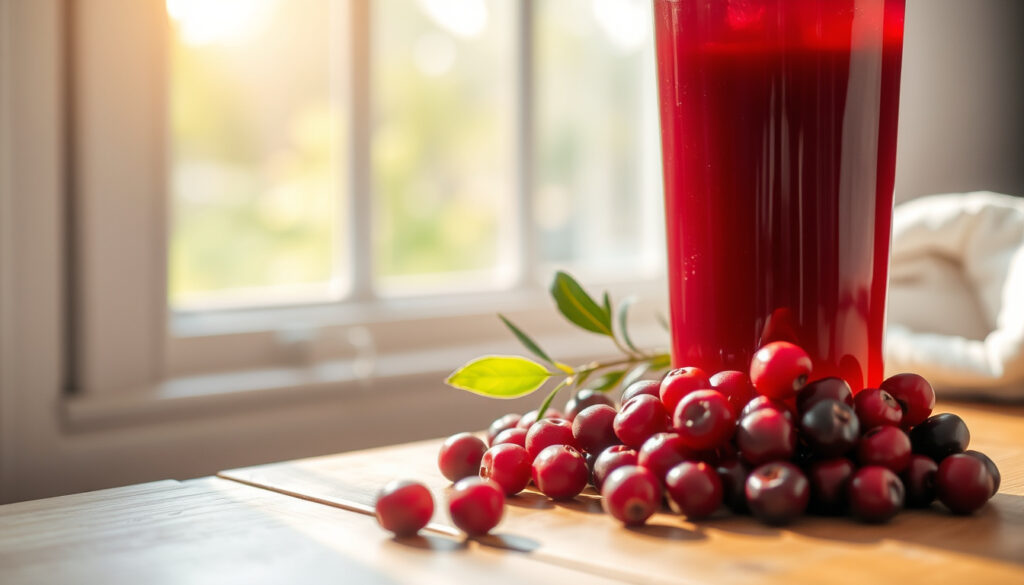
Is Cranberry Juice Good for You? Benefits, Risks & Daily Intake
You’ve probably heard someone swear by cranberry juice for urinary tract health, or maybe you’ve wondered if that tart red drink is actually good for you beyond the occasional cocktail mixer. The answer depends heavily on which bottle you grab and how much you pour. A 2023 Cochrane review found that cranberry products can reduce the risk of symptomatic UTIs in certain groups, but the devil is in the details—sugar content, dosage, and who you are all matter.
Calories per cup (unsweetened): 116 kcal (USDA FoodData Central) ·
Vitamin C per cup: 24% DV (USDA) ·
Sugar per cup (unsweetened): 31 g (USDA) ·
Key antioxidants: proanthocyanidins, flavonoids (Harvard T.H. Chan School of Public Health) ·
UTI risk reduction (daily intake): ~50% in some studies (Cochrane Library)
Quick snapshot
- Cranberry juice contains proanthocyanidins that may prevent bacteria adhesion in the urinary tract (PubMed (2023 Cochrane review))
- Unsweetened cranberry juice is a good source of vitamin C (USDA) (PubMed (2023 Cochrane review))
- Research on cranberry juice spans decades; a 2023 Cochrane review updated the evidence (Cochrane Library)
- Future research may clarify optimal dosing and long-term effects (NCCIH)
Four key nutrition facts, one takeaway: unsweetened cranberry juice is a low-calorie source of vitamin C and antioxidants, but sugar content varies wildly.
| Nutrient (8 oz unsweetened) | Value |
|---|---|
| Calories | 116 kcal (USDA) |
| Vitamin C (% DV) | 24% (USDA) |
| Sugar (g) | 31 g (USDA) |
| Key antioxidants | Proanthocyanidins, anthocyanins, quercetin (Harvard T.H. Chan) |
Is it beneficial to drink cranberry juice every day?
That depends on what you mean by “cranberry juice.” The health halo around this beverage comes primarily from two areas: vitamin C content and the unique compounds called proanthocyanidins that interfere with bacteria sticking to the bladder wall. But the sugar load in many commercial juices can cancel out those benefits.
How much cranberry juice should you drink daily?
- Moderate daily intake is commonly described as one small glass, about 8 ounces, of unsweetened juice (Healthline).
- The NHS (UK national health authority) includes cranberry juice in self-care for UTIs but warns against relying on it as treatment.
Drinking 8 ounces of unsweetened cranberry juice gives you vitamin C and antioxidants without excessive sugar—but the same volume of cocktail can pack more sugar than a soda.
What happens if you drink 100% cranberry juice every day?
- Consistent daily intake may reduce UTI recurrence risk by about 50% in certain populations, per the 2023 Cochrane Library (global health evidence database).
- However, the same review notes that the effect is strongest in women with recurrent UTIs, children, and people susceptible after medical interventions (PubMed).
- For everyone else, daily consumption may offer only marginal benefit.
The implication: daily drinking works best as a preventive measure for a specific audience, not a universal health tonic.
Is zero sugar cranberry juice good for you?
- Harvard T.H. Chan School of Public Health notes that cranberry juice cocktail can be much higher in added sugar than 100% unsweetened juice.
- Zero-sugar versions (often sweetened with stevia or monk fruit) eliminate the sugar worry while preserving the antioxidant content.
Cranberry juice for weight loss
- Unsweetened cranberry juice is relatively low in calories (116 kcal per cup) and can be a hydrating alternative to sugary drinks.
- No studies directly link cranberry juice to fat loss; any effect comes from replacing higher-calorie beverages.
The pattern: daily intake is most valuable for recurrent UTI prevention, not general wellness.
Is cranberry juice good for your kidneys and bladder?
This is where the evidence gets split. Cranberry juice’s reputation for bladder health is well-earned, but its relationship with kidneys is more complicated.
Cranberry juice for kidney health
- The Mayo Clinic warns that people prone to kidney stones should be cautious because cranberries contain oxalate, which can contribute to calcium oxalate stones.
- Direct evidence for a beneficial effect on kidney function is mixed; no major study shows that cranberry juice improves kidney health independently.
Does cranberry juice prevent kidney stones?
- Some studies suggest that cranberry’s compounds could reduce stone formation, but the oxalate content complicates the picture (Mayo Clinic).
- For individuals with a history of oxalate stones, cranberry juice may actually increase risk.
What this means: Cranberry juice is a friend to the bladder (UTI prevention) but a potential risk to the kidneys for stone-prone individuals.
Is ocean spray cranberry juice good for you?
Ocean Spray dominates the market, but not all of its products are created equal. The brand’s lineup spans from 100% juice to sweetened cocktails, so reading the label is essential.
Is Ocean Spray 100% cranberry juice real cranberry juice?
- Yes, Ocean Spray’s 100% juice is made from real cranberries, though often from concentrate (Dr. Stanfield).
- An 8-ounce serving of cranberry juice cocktail contains only about 27% cranberry juice, with the rest being water and sweeteners.
Sugar content in Ocean Spray products
- The classic Cranberry Juice Cocktail has added sugars; Harvard T.H. Chan calls out cranberry cocktail as “much higher in added sugar.”
- Ocean Spray also sells unsweetened 100% juice and a zero-sugar version sweetened with stevia.
Ocean Spray vs other brands
- Most store brands follow a similar pattern: 100% juice is healthier than cocktail.
- NHS guidance applies equally across brands—look for no added sugars.
The pattern: Ocean Spray offers both healthy and unhealthy options. “100% juice” is good; “Cocktail” is a treat, not a health drink.
Does cranberry juice help reduce swelling?
The anti-inflammatory potential of cranberries often leads to claims about reducing swelling, but the evidence is thin.
Cranberry juice for inflammation
- NCCIH (U.S. National Center for Complementary and Integrative Health) notes that cranberries contain antioxidants, which are associated with reducing inflammation.
- However, no robust clinical trial has tested cranberry juice specifically for swelling reduction.
What drinks reduce swelling in ankles?
- Adequate hydration is known to help reduce edema; cranberry juice can contribute to fluid intake.
- But the NHS emphasizes water as the best choice for hydration.
The catch: Cranberry juice’s anti-inflammatory compounds are real, but you’d need a concentrated supplement to see measurable effects on swelling—a glass of juice won’t do it alone.
Who should not drink cranberry juice?
Cranberry juice is generally safe for most people, but three groups should be cautious.
Side effects of cranberry juice
- Stomach upset can occur with large amounts (NCCIH).
- The high natural acidity may aggravate reflux or sensitive stomachs.
Cranberry juice interactions with medications
- NCCIH warns that cranberry products may interact with warfarin (a blood thinner) and increase bleeding risk.
- People with diabetes need to account for sugar content, even in unsweetened juice (31 g of natural sugar per cup).
- Those prone to oxalate kidney stones should avoid concentrated cranberry products (Mayo Clinic).
Upsides
- May reduce recurrent UTI risk
- Good source of vitamin C and antioxidants
- Supports heart health by lowering LDL cholesterol (per animal studies cited by Harvard)
- Low in calories when unsweetened
Downsides
- High sugar content in sweetened versions
- May increase kidney stone risk in susceptible individuals
- Interacts with blood thinners like warfarin
- Can cause stomach upset if consumed in large quantities
Confirmed facts
- Cranberry juice contains proanthocyanidins that may prevent bacteria adhesion in the urinary tract (PubMed)
- Unsweetened cranberry juice is a good source of vitamin C (USDA)
What’s unclear
- Whether cranberry juice directly reduces swelling in ankles (NCCIH)
- Optimal daily dose for UTI prevention (FDA)
- Effectiveness for kidney stone prevention (Mayo Clinic)
The implication: Cranberry juice is safe for most, but those on warfarin, with kidney stones, or managing diabetes should consult a doctor.
“Cranberry juice is rich in vitamin C and antioxidants.”
— WebMD
“May improve heart health and fight age-related damage.”
For someone considering daily cranberry juice for UTI prevention, the choice is clear: opt for unsweetened, limit to one small glass, and don’t expect it to cure an infection. The evidence supports prevention, not treatment. If you’re on warfarin or prone to kidney stones, skip the juice and talk to your doctor. For everyone else, a glass of 100% unsweetened cranberry juice is a healthy addition—as long as you know what you’re pouring.
londonjuicecompany.com, drstanfield.com, cranberryinstitute.org, goodrx.com, medicalnewstoday.com
Frequently asked questions
Can cranberry juice cure a UTI?
No. The NHS states that cranberry juice is not a treatment for active UTIs. It may help prevent recurrence but cannot replace antibiotics.
Is cranberry juice good for pregnancy?
Cranberry juice is generally safe during pregnancy, but pregnant women should consult their healthcare provider. The NCCIH notes no known harm, but moderation is key.
What is the best time to drink cranberry juice?
There’s no specific recommended time. Drinking it with a meal may reduce acidity-related stomach upset.
Can cranberry juice help with vaginal health?
Some evidence suggests it may help reduce bacterial adhesion, but it’s not a treatment for infections. The 2023 Cochrane review focused on UTIs, not vaginal infections.
Is cranberry juice good for skin?
Vitamin C and antioxidants in cranberry juice support collagen production and may protect against UV damage, per Healthline.
How does cranberry juice affect blood pressure?
Some animal studies suggest cranberry compounds may support healthy blood pressure, but human evidence is limited. The Harvard T.H. Chan review notes potential benefits for heart health.
More related posts
 Selena Gomez Net Worth: Forbes vs Bloomberg Billionaire Debate
 Space NK Covent Garden: Guide to London’s Beauty Store
 Codeine Phosphate 30mg دواء – Uses, Dosage & Side Effects
 What Is a Hypothesis – Definition, Types, Examples
 Coats Ladies: Best Irish Stores & Styles 2025
 Melissa Joan Hart: Career, Family, and Political Views
 The Thursday Murder Club: Netflix Movie, Books & Sequel Guide
