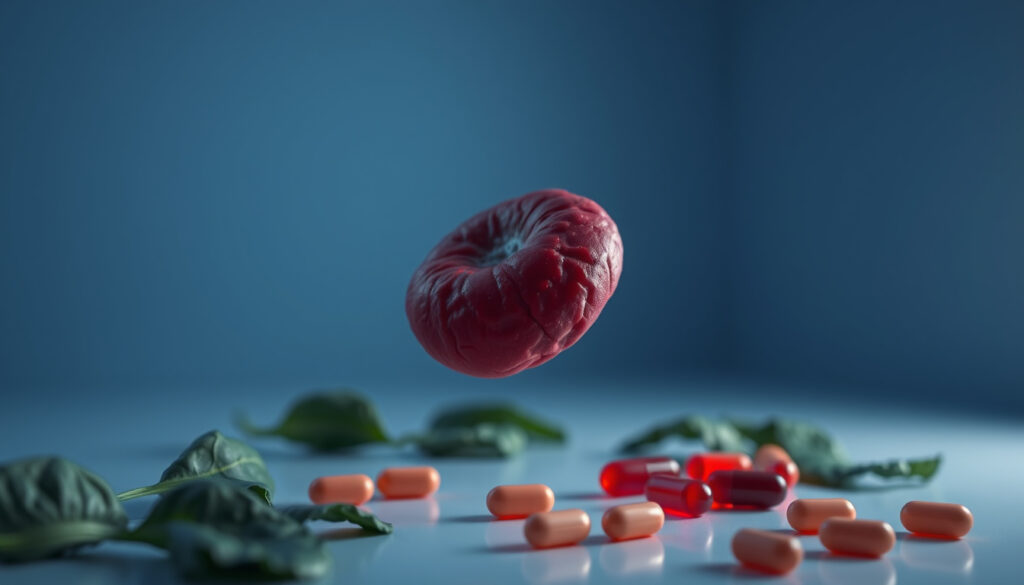
Symptoms of Low Iron: Key Signs and What to Do Next
Anyone who has dragged through a day feeling exhausted for no clear reason knows that fatigue isn’t just about missed sleep. That bone-deep tiredness, along with a handful of other subtle shifts, might be your body signalling something more specific: low iron. This guide walks through the symptoms of low iron—from the well-known to the surprising—and explains why catching a deficiency early matters more than you might expect.
Most common symptom of low iron: Fatigue ·
Global prevalence of iron deficiency: Affects an estimated 2 billion people ·
Women affected more than men: Women have twice the risk of iron deficiency compared to men
Quick snapshot
- Fatigue (Mayo Clinic (major medical institution))
- Pale skin (Mayo Clinic)
- Shortness of breath (Mayo Clinic)
- Heart palpitations (Mayo Clinic)
- Dizziness (Mayo Clinic)
- Blood loss (menstruation, ulcers) (Mayo Clinic)
- Poor diet (NI Direct (Northern Ireland Health Service))
- Malabsorption (Mayo Clinic)
- Increased need (pregnancy) (Mayo Clinic)
- Complete blood count (Mayo Clinic)
- Ferritin test (Mayo Clinic)
- Hemoglobin level (Mayo Clinic)
- Staging via iron studies (NI Direct (Northern Ireland Health Service))
- Iron-rich foods (Mayo Clinic)
- Vitamin C pairing (NI Direct (Northern Ireland Health Service))
- Oral supplements (Mayo Clinic)
- IV iron in severe cases (Mayo Clinic)
Four key facts that set the stage for understanding low iron levels.
| Measurement | Value |
|---|---|
| Daily iron requirement (women 19–50) | 18 mg |
| Daily iron requirement (men) | 8 mg |
| Absorption rate – heme iron | 15–35% |
| Absorption rate – non-heme iron | 2–20% |
How do I know if my iron is low?
What are the most common symptoms of low iron?
When iron stores dip, the body’s ability to produce hemoglobin drops, and oxygen delivery takes a hit. The most universal signal is fatigue — half or more of people with iron deficiency report feeling worn out, according to Health News Ireland (Irish haematology resource). Beyond tiredness, a handful of physical signs are strong indicators:
- Pale skin and nail beds — reduced hemoglobin means less red colour in the skin. Mayo Clinic (major medical institution) lists pallor as a classic sign.
- Shortness of breath during normal activity — because muscles aren’t getting enough oxygen.
- Heart palpitations — the heart pumps harder to compensate for low oxygen in the blood.
- Headaches and dizziness — the brain is especially sensitive to reduced oxygen supply.
- Brittle nails and hair loss — low iron affects the proteins that keep hair and nails strong.
A person experiencing two or more of these symptoms simultaneously has a stronger case for iron deficiency than someone with just fatigue alone.
What are some less obvious signs of low iron?
Some symptoms of low iron fly under the radar because they seem unrelated to blood. Two of the most intriguing are restless legs syndrome and pica. Mayo Clinic notes that restless legs syndrome can be triggered or worsened by iron deficiency — the exact mechanism is still under study. Similarly, pica — the craving for non-food items like ice, dirt, or clay — has a known association with low iron, though why the brain drives this behaviour remains unclear. Other overlooked signs include a sore or swollen tongue and cold hands and feet.
These atypical symptoms often lead people to dismiss their condition as a general malaise rather than a treatable deficiency. The implication: if ice cravings or restless legs keep you up, adding iron to your differential might pay off sooner than chasing sleep aids.
What happens if iron levels are too low?
Can low iron lead to anemia?
Yes — and this is the central progression to understand. The NI Direct (Northern Ireland Health Service) states that iron deficiency anemia is the most common type of anemia globally. The trajectory from low iron stores to full-blown anemia happens in three stages, which we’ll break down in a dedicated section below.
What are the long-term effects of low iron?
Letting low iron sit untreated can ripple through almost every system in the body. Mayo Clinic warns that untreated iron deficiency anemia can lead to heart complications including arrhythmias and even heart failure, because the heart works overtime to push oxygen-starved blood. Cognitive impairment — trouble concentrating, brain fog, memory issues — is common.
- Increased risk of infections — iron is vital for immune cell function.
- Pregnancy complications — Mayo Clinic links serious deficiency in pregnancy with premature birth and low birth weight.
- Pica — the craving for ice, dirt, or starch is a well-documented consequence, though the exact neurological pathway is not fully understood.
For a pregnant woman in Ireland — where iron deficiency affects a significant share of mothers — the choice to treat low iron early is not just about comfort; it directly impacts birth outcomes.
What drains iron from your body?
What medical conditions cause iron loss?
Blood loss is the single largest driver of iron depletion. Heavy menstrual periods are the top cause among women of reproductive age, while gastrointestinal bleeding — from ulcers, polyps, or colorectal cancer — is the most common cause in men and postmenopausal women. Mayo Clinic also flags malabsorption conditions such as celiac disease and Crohn’s disease as significant contributors — even a good diet won’t help if the gut cannot absorb the mineral.
What lifestyle factors deplete iron?
Beyond medical conditions, daily habits play a real role. Chronic blood donation, a vegetarian or vegan diet without careful planning, and high-intensity endurance training all increase iron turnover. The catch: many people don’t recognize the cumulative effect of these factors until their symptoms become noticeable.
How to boost iron immediately?
What foods are rich in iron?
Iron comes in two dietary forms: heme (from animal sources, absorbed at 15–35%) and non-heme (from plants, absorbed at just 2–20%). The most efficient sources are:
- Red meat, liver, and poultry — top-tier heme iron sources.
- Spinach, lentils, and beans — good non-heme sources, especially when paired with vitamin C.
- Fortified cereals — a reliable baseline for many people.
Pairing non-heme iron with vitamin C — squeezing lemon over spinach or having a glass of orange juice with fortified cereal — can boost absorption several-fold. Conversely, tea and coffee consumed with a meal can reduce iron uptake by up to 60% due to tannins.
What drinks can quickly increase iron?
Blackstrap molasses dissolved in warm water or milk is a traditional remedy that contains roughly 3.5 mg of iron per tablespoon. Prune juice also provides a modest amount. The trade-off: drinks alone rarely correct a significant deficiency — food sources or supplements are more reliable for sustained improvement.
Should I take iron supplements?
Oral iron supplements (typically ferrous sulphate, ferrous gluconate, or ferrous fumarate) are the standard first-line treatment for diagnosed deficiency. Mayo Clinic notes that supplements can restore iron levels over weeks, but side effects like constipation, nausea, and dark stools are common. Taking them with a small amount of vitamin C — but not with calcium-rich foods or tea — improves tolerance and results.
A person who starts self-supplementing without a ferritin test risks masking an underlying bleed. For Irish patients, the NI Direct guidance is clear: get a blood test first.
What are the 3 stages of iron deficiency?
What is iron depletion?
Stage 1 is the quietest phase. The body’s iron stores — measured by serum ferritin — start dropping, but the blood still produces red blood cells normally. No symptoms appear at this stage, making it invisible without a blood test.
What is iron-deficient erythropoiesis?
Stage 2 is where the system starts to struggle. Iron stores are so low that the bone marrow cannot produce enough hemoglobin for new red blood cells. These cells become smaller and paler than normal. Subtle fatigue might creep in, but many people still don’t connect it to iron.
What is iron-deficiency anemia?
Stage 3 is when the classic symptoms of low iron — fatigue, pale skin, chest pain, shortness of breath, palpitations — become unmistakable. Hemoglobin levels drop below normal thresholds (typically below 12 g/dL for women, below 13 g/dL for men). At this point, the heart and lungs are working overtime, and the risk of complications rises sharply.
The pattern: iron deficiency is a spectrum, not a binary. Catching it at Stage 1 or 2, before anemia sets in, means treatment is simpler and faster.
For a woman experiencing heavy periods — the group most at risk — yearly ferritin screening could catch Stage 1 depletion before it becomes Stage 3 anemia with heart strain. That single blood marker changes the timeline entirely.
Confirmed facts vs. what’s unclear
Confirmed facts
- Fatigue is a near-universal symptom of iron deficiency (Health News Ireland)
- Blood loss is a major cause (Mayo Clinic)
- Iron deficiency can progress to anemia (NI Direct)
- Oral supplements restore levels over weeks (Mayo Clinic)
What’s unclear
- Exact mechanism linking iron deficiency to pica (under research)
- Whether specific drinks (e.g., blackstrap molasses) are significantly effective vs. supplements
Expert perspectives
Symptoms include extreme tiredness, weakness, pale skin, chest pain, fast heartbeat, shortness of breath, headache, dizziness.
Mayo Clinic (major medical institution)
Symptoms include tiredness, lack of energy, shortness of breath, noticeable heartbeats (palpitations), paler than usual skin.
NI Direct (Northern Ireland Health Service)
The convergence of these two authoritative sources — one US-based, one UK/NI-based — reinforces the same core symptom set. For anyone reading this in Ireland, the NHS-aligned advice from NI Direct offers a directly applicable framework for what to discuss with a GP.
goodrx.com, stvincents.org, irishtimes.com, support.genetrack.ie
Frequently asked questions
Can low iron cause depression?
There is some evidence linking iron deficiency with mood changes, but the relationship is not fully established. Iron is involved in neurotransmitter production, and deficiency may contribute to depressive symptoms in some people. If you experience low mood along with fatigue and other signs of low iron, it is worth discussing iron levels with your doctor.
What is the best time to take iron supplements?
Taking iron supplements on an empty stomach (one hour before meals or two hours after) maximizes absorption. If stomach upset occurs, taking them with a small amount of food is acceptable. Avoid taking them with calcium-rich foods, tea, or coffee, as these reduce absorption.
How long does it take to correct low iron?
With consistent supplementation, most people see improvement in symptoms within one to two weeks, but it can take two to four months to fully replenish iron stores. A follow-up blood test is usually recommended to confirm levels have normalized.
Is it safe to take iron supplements every day?
For people with diagnosed deficiency, daily supplementation under medical supervision is safe and effective. Long-term daily use without deficiency can lead to iron overload, which damages organs. Never supplement without a confirmed low iron reading.
Can low iron cause frequent infections?
Yes — iron is essential for immune cell function. Mayo Clinic notes that iron deficiency anemia increases susceptibility to infections. Correcting iron levels supports a healthier immune response.
What is the difference between iron deficiency and anemia?
Iron deficiency means your body’s iron stores are low but your red blood cells may still be normal. Anemia is a later stage where the blood cannot carry enough oxygen because hemoglobin production has fallen. Not all iron deficiency is anemia, but all iron-deficiency anemia starts with iron deficiency.
Can low iron cause hair loss?
Yes — Mayo Clinic lists brittle nails and hair loss as symptoms of iron deficiency anemia. Iron supports the proteins that maintain hair growth, and low levels can trigger telogen effluvium, a temporary shedding phase.
Related reading: Low Red Blood Cell Count: Causes, Symptoms & Fixes · Why Do I Feel Sick – Common Causes and Remedies
More related posts
 Italian Bach (Isaac Smith): Real Name, Age, Girlfriend Mystery
 6 ft in cm – Exact Height Conver ion and Compari on Guide
 Remco Evenepoel: Football Exit, Crash, Team Move & Salary
 Cast of The Full Monty: 1997 Original and 2023 TV Series
 Diageo Share Price UK: Crash Analysis After Dividend Cut
 Campanile Val de France – Budget Hotel Near Disneyland Paris
 Ruben Dias: Age, Height, Position, Net Worth & Personal Life
 Celta Vigo vs Barcelona – Preview, Prediction, Lineups
