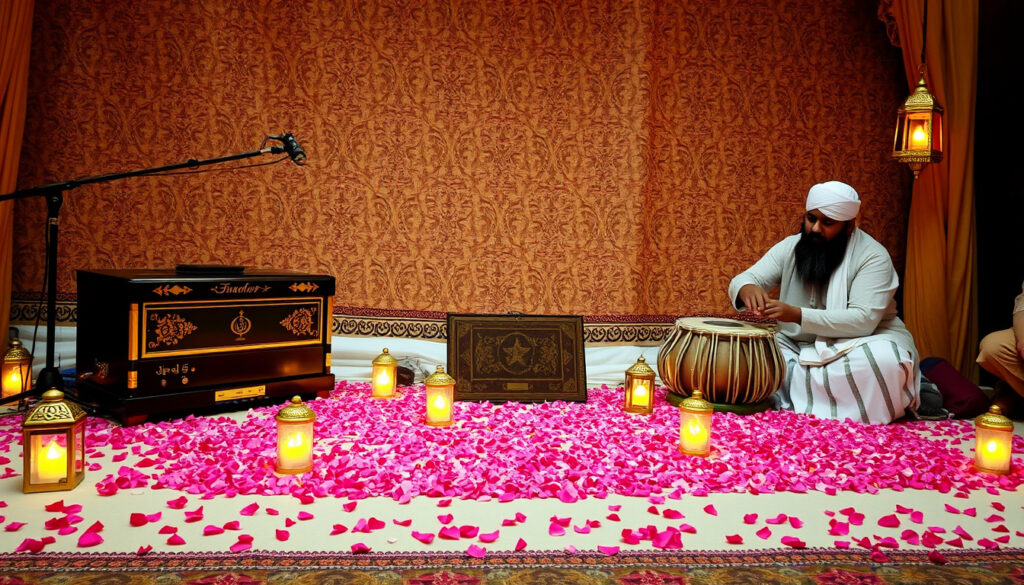
Rahat Fateh Ali Khan – Biography, Songs and Controversies
Rahat Fateh Ali Khan, born December 9, 1973, stands as one of the most celebrated voices in Pakistani music. As the nephew of legendary Qawwali icon Nusrat Fateh Ali Khan, he has carved his own identity while continuing a family tradition spanning generations. His powerful vocals and devotional performances have earned him a global following across South Asia, Europe, and North America.
From performing alongside his father and uncle as a child to selling out arenas worldwide, Rahat’s journey reflects both remarkable success and occasional controversy. The artist known as Shahenshah-e-Qawwali (King of Kings of Qawwali) has navigated the challenges of maintaining a legendary musical legacy while establishing his own creative path.
Who is Rahat Fateh Ali Khan?
Rahat Fateh Ali Khan is a Pakistani Punjabi singer specializing in Qawwali, a form of Sufi devotional music. Born in Faisalabad, Punjab, Pakistan, he hails from a family of musicians with roots tracing back to Ghazni, Afghanistan, during the era of Mahmud of Ghazni. His father Farrukh Fateh Ali Khan, grandfather Fateh Ali Khan, and uncle Nusrat Fateh Ali Khan form the core of a musical dynasty that has shaped Qawwali for decades.
Key Facts About Rahat Fateh Ali Khan
- He received formal Qawwali training from his uncle Nusrat starting at age seven, after already singing with his father from age three.
- He made his public debut at age nine, performing on his grandfather’s death anniversary.
- He joined Nusrat’s touring group by age 15 and traveled to the UK in 1985.
- After Nusrat’s death in 1997, Rahat led the family legacy alongside his father Farrukh.
- He stands at 5 feet 3½ inches (162 cm) and is known for his distinctive baritone voice.
- His nickname Shahenshah-e-Qawwali translates to “King of Kings of Qawwali.”
- He is considered one of Pakistan’s highest-paid singers.
Rahat Fateh Ali Khan at a Glance
| Fact | Details |
|---|---|
| Full Name | Rahat Fateh Ali Khan |
| Date of Birth | December 9, 1973 |
| Place of Birth | Faisalabad, Punjab, Pakistan |
| Nationality | Pakistani |
| Father | Farrukh Fateh Ali Khan (musician) |
| Uncle | Nusrat Fateh Ali Khan |
| Height | 5′ 3½” (162 cm) |
| Religion | Islam |
| Nickname | Shahenshah-e-Qawwali |
| Hobbies | Traveling |
What is Rahat Fateh Ali Khan Famous For?
Rahat Fateh Ali Khan has built an international reputation through his performances in traditional Qawwali, film soundtracks, and television appearances. His career spans multiple industries, including Pakistani cinema, Bollywood, and international music projects. He performs Qawwali, ghazals, Sufi songs, and film music, touring globally across Pakistan, India, the UK, and the United States.
Career Milestones and Achievements
Rahat debuted as a playback singer in Pakistan’s film Mard Jeenay Nahi Detay (1997) with the song “Kisi Roz Milo Hamein Shaam Dhaley.” His transition to Bollywood came in 2003 with “Mann Ki Lagan” from the film Paap, discovered by Pooja Bhatt during a trip to Pakistan. Earlier international work included a 1995 soundtrack contribution to the film Dead Man Walking.
His appearance at the 2014 Nobel Peace Prize Concert marked a historic moment, as he became the first Pakistani artist to perform at the event. During that performance, he sang “Tumhe Dillagi,” “Mast Qalandar,” and “Aao Parhao.” Major UK tours followed in 2012, with concerts at Wembley and Manchester Arenas drawing over 20,000 attendees combined.
Coke Studio Pakistan proved to be a defining platform for his career. His collaboration with Momina Mustehsan on “Afreen Afreen” (Season 9) has accumulated over 300 million views on YouTube. His performance of “Aaj Rang Hai” with Amjad Sabri held particular significance, as it became one of Sabri’s final recordings before his assassination in 2016.
The YouTube music video for “Zaroori Tha” (2014) has surpassed 1 billion views, demonstrating Rahat’s international appeal beyond traditional Qawwali audiences.
Notable Songs and Qawwali Repertoire
Among his most recognized works, “Allah Hoo” stands as an iconic Qawwali that continues the family tradition established by his uncle. Other major hits include “Mann Ki Lagan,” “Zaroori Tha,” “Afreen Afreen,” “Tumhe Dillagi,” “Mast Qalandar,” “Aaj Rang Hai,” and “Sab Jhoote,” which he self-penned in 2013. He continues to perform portions of Nusrat’s extensive Qawwali repertoire, preserving the family’s musical heritage.
His versatility has allowed him to serve as a television judge on programs including Chhote Ustaad alongside Sonu Nigam and Junoon in 2008, further expanding his influence across South Asian entertainment industries.
Awards and Industry Recognition
While comprehensive award details remain limited in available sources, Rahat’s status as one of Pakistan’s highest-paid singers and the holder of titles including “King of Qawwali” reflects substantial industry recognition. He has achieved record-setting ticket sales in the UK market and reached billion-view milestones on digital platforms.
Specific awards and nominations are not fully documented across available sources. For complete award listings, readers should consult dedicated music award databases or the artist’s official channels.
What Happened in the Rahat Fateh Ali Khan Controversy?
Several incidents have attracted media attention throughout Rahat Fateh Ali Khan’s career. In January 2011, Indian customs authorities detained him for undeclared goods; he was later released. A 2013 divorce rumor involving his wife Nida was denied by representatives. In 2015, Indian authorities deported him from Hyderabad for entering the country through an unauthorized airport.
The January 2024 Incident
The most widely discussed controversy came in January 2024, when a video went viral showing Rahat slapping student Naveed Hasnain with slippers over a misplaced bottle of holy water. The incident generated significant public reaction and discussion about appropriate conduct.
Rahat subsequently issued an apology, appearing in a video alongside Naveed and his father. Naveed’s father confirmed the apology and provided context for the incident, suggesting a degree of resolution between the parties involved.
The July 2024 Dubai Matter
Reports emerged in July 2024 concerning an incident in Dubai, with some accounts mentioning an arrest related to a defamation complaint filed by a former manager. Rahat publicly denied being arrested, describing reports of an arrest as rumors. Available sources do not confirm the specific details or outcome of any legal proceedings in Dubai.
Detailed legal documentation regarding the Dubai matter remains limited in available sources. Claims about police actions or case resolution should be verified through official authorities or court records.
Understanding the Timeline of Events
Rahat Fateh Ali Khan’s public history includes both professional achievements and legal matters spanning several years.
- 1973: Born on December 9 in Faisalabad, Pakistan
- 1982: Began formal training under uncle Nusrat Fateh Ali Khan at age seven
- 1982: Made public debut at age nine on grandfather’s death anniversary
- 1988: Joined Nusrat’s touring group at age 15; toured UK that year
- 1997: Debuted as playback singer in Pakistani film Mard Jeenay Nahi Detay
- 1997: Following Nusrat’s death, led family legacy alongside father Farrukh
- 2003: Entered Bollywood with “Mann Ki Lagan” from Paap
- 2011: Detained by Indian Customs; later released
- 2012: Major UK tours at Wembley and Manchester Arenas
- 2014: First Pakistani performer at Nobel Peace Prize Concert
- 2015: Deported from Hyderabad, India
- 2018: Family rift over song rights with Nusrat’s daughter
- January 2024: Slapping incident with student; apology issued
- July 2024: Reports emerge of Dubai incident; Rahat denies arrest
What Remains Verified Versus Unclear
Available sources provide varying levels of detail regarding events involving Rahat Fateh Ali Khan. The following comparison identifies what can be confirmed versus what requires additional verification.
| Established Information | Information Requiring Verification |
|---|---|
| Born December 9, 1973, in Faisalabad | Specific legal outcome of 2024 Dubai matter |
| Nephew of Nusrat Fateh Ali Khan | Complete details of family song rights dispute |
| January 2024 slapping incident occurred | Whether formal charges were filed |
| Apology video released with Naveed Hasnain and father | Current status of any ongoing legal proceedings |
| Rahat denied being arrested in Dubai | Official court documentation from any jurisdiction |
| Family confirmed acceptance of apology | Details of any settlement agreements |
The Broader Context of Rahat Fateh Ali Khan’s Career
Rahat Fateh Ali Khan occupies a unique position in contemporary music as a custodian of a centuries-old tradition. His family traces its musical lineage to Afghanistan during Mahmud of Ghazni’s era, with the Qawwali form itself dating back centuries as a vehicle for Sufi spiritual expression. This historical depth gives added significance to his performances of devotional material.
The challenges of maintaining such a legacy became apparent after Nusrat’s death in 1997, when the younger Rahat faced sudden pressure to carry forward the family name. The 2018 family rift over song rights with Nusrat’s daughter illustrated tensions that can arise when commercial interests intersect with artistic heritage. Sources indicate the dispute involved questions of ownership over songs from the shared repertoire.
Despite these challenges, Rahat has successfully navigated multiple markets, from Pakistani television to Bollywood soundtracks and Western film scores. His ability to perform traditional Qawwali alongside contemporary film music demonstrates adaptability that has helped broaden his audience beyond traditional boundaries.
Sources and Statements
“We accept the apology. It happened because of a misplaced bottle. Rahat saab also apologized in the video. Everything is fine now.” — Naveed Hasnain’s father, confirming resolution of the January 2024 incident
“I want to clarify that I was not arrested. These are just rumors.” — Rahat Fateh Ali Khan, addressing July 2024 Dubai reports
This article draws information from multiple sources including Wikipedia, StarsUnfolded, and Riyaaz Qawwali. For the most current developments, readers should consult these sources directly or follow official statements from the artist.
Summary
Rahat Fateh Ali Khan represents a significant figure in contemporary Qawwali music, carrying forward a family tradition while achieving individual international recognition. Born in Faisalabad in 1973, he trained under his uncle Nusrat and built a career spanning Pakistani cinema, Bollywood, and global performances. His achievements include billion-view videos, historic concert appearances, and television work. Challenges have included legal issues across borders and family disputes over artistic legacy. For information about his net worth and related details, specialized financial reporting should be consulted.
Frequently Asked Questions
What is Rahat Fateh Ali Khan’s net worth?
Specific net worth figures are not documented in available sources. The artist is recognized as one of Pakistan’s highest-paid singers, though exact financial details remain private.
How tall is Rahat Fateh Ali Khan?
Rahat Fateh Ali Khan stands at 5 feet 3½ inches, which is approximately 162 centimeters.
Is Rahat Fateh Ali Khan married?
Rahat Fateh Ali Khan has been associated with Nida. Rumors of a 2013 divorce were denied, though detailed personal information remains limited in public sources.
What happened in the Rahat Fateh Ali Khan Dubai case?
Reports emerged in July 2024 about a defamation complaint from a former manager. Rahat denied being arrested and described the reports as rumors. Detailed documentation of any legal proceedings remains unavailable.
What are Rahat Fateh Ali Khan’s most famous songs?
Among his best-known works are “Allah Hoo,” “Zaroori Tha,” “Afreen Afreen,” “Mann Ki Lagan,” “Tumhe Dillagi,” “Mast Qalandar,” and “Aaj Rang Hai.”
Was Rahat Fateh Ali Khan cleared by Dubai police?
Available sources do not confirm any official clearance statement from Dubai authorities. Rahat has denied being arrested but has not provided documentation of any legal resolution.
Who trained Rahat Fateh Ali Khan?
Rahat received formal Qawwali training from his uncle Nusrat Fateh Ali Khan starting at age seven. He had previously been singing with his father from age three.
What controversy surrounded the 2024 apology?
In January 2024, a video showed Rahat slapping student Naveed Hasnain with slippers over a misplaced bottle of holy water. He apologized in a joint video with Naveed and his father, who confirmed acceptance of the apology.
More related posts
 CBT Test Near Me: Cost, Duration & How to Pass in a Day
 Natasha Lyonne: Health, Sobriety, Family & Relationships
 Celebrity Traitors UK 2025: Cast, Start Date, Episodes
 Diane Morgan: Her Accent, Career, and Private Life
 Dean Winchester: Age, Death & Full Character Guide
 Stephen Bunting: Career, Family, and World Championship Win
 Questions to Ask Your Boyfriend – Fun, Deep, Future & Spicy Lists
