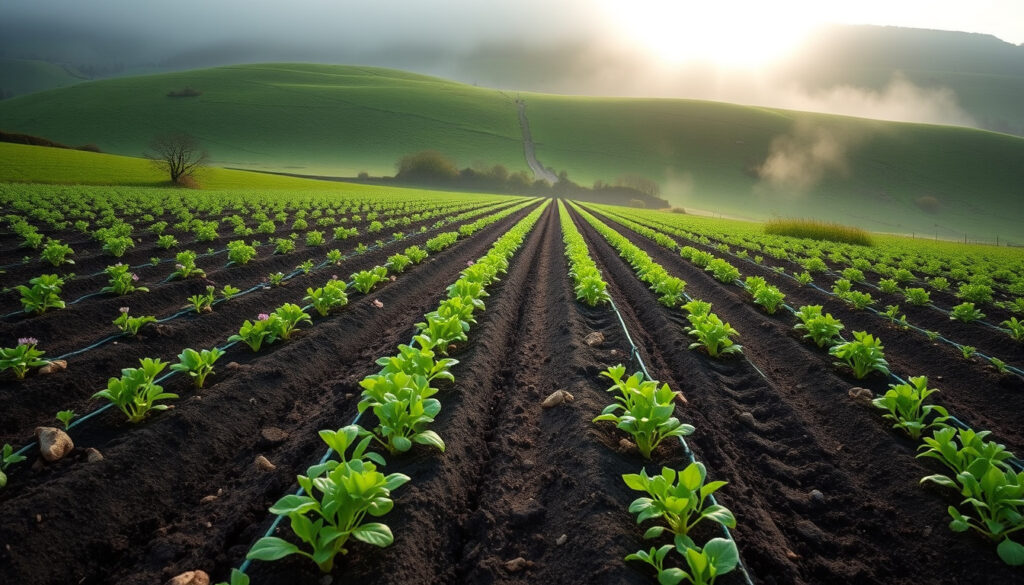
When to Plant Potatoes: Best Months and Ireland Tips
If you’ve ever stared at a bag of seed potatoes and wondered whether it’s too early—or dangerously late—to get them in the ground, you’re not alone. Ireland has a long tradition of timing potato plantings around St. Patrick’s Day, and official bodies like Teagasc and Bord Bia have spent decades refining what works best for each variety. By the end of this guide, you’ll know exactly when to plant earlies versus maincrop, how to read soil temperature, and what mistakes to sidestep for a decent haul.
Planting window: March-April · Soil temperature needed: 7°C for 3 days · Maincrop harvest time: 18 weeks after mid-late April · Earlies planting: Mid-March to early April · Yield per seed potato: 5-10 potatoes
Quick snapshot
- March and April are the standard planting months in Ireland (Bord Bia Grow Guide: Potatoes)
- Maincrop potatoes need soil above 7°C for three consecutive days before planting (Teagasc Growing Potato Fact Sheet)
- Earlies are traditionally planted around St. Patrick’s Day, ready in 14 weeks (Bord Bia Grow Guide: Potatoes)
- Exact success rates for planting supermarket potatoes vary with no controlled trials (Bord Bia Grow Guide: Potatoes)
- Yield variations by variety under home-growing conditions lack recent Irish data (Teagasc Growing Potato Fact Sheet)
- First earlies: mid-March to March 17 (St. Patrick’s Day) in most areas (Bord Bia Grow Guide: Potatoes)
- Second earlies: early to mid-March (Teagasc Growing Potato Fact Sheet)
- Maincrop: mid to late April (Bord Bia Grow Guide: Potatoes)
- Earlies harvest June-July, roughly 14 weeks after planting (Bord Bia Grow Guide: Potatoes)
- Maincrop harvest early October before frosts, around 18 weeks after planting (Bord Bia Grow Guide: Potatoes)
The following specifications summarize the critical growing parameters for potato cultivation in Ireland, drawn from official agricultural sources.
| Label | Value |
|---|---|
| Optimal soil temp | 7°C |
| Earlies planting | Mid-March – early April |
| Maincrop planting | Mid-late April |
| Pre-frost window | 2-3 weeks before last frost |
| Row spacing | 25cm plants, 50cm rows |
| Maincrop spacing | 20-25cm plants, 60cm rows |
What months can you plant potatoes?
Potatoes in Ireland are planted from February through May, depending on the variety and your location. First earlies go in the ground earliest, followed by second earlies, then maincrop. The window stretches roughly from mid-February in the southwest (Wexford) to late April in cooler inland areas.
Earlies vs maincrop
Bord Bia notes that early varieties are traditionally planted around St. Patrick’s Day on March 17, with harvest occurring about 14 weeks later. Maincrop varieties go in mid to late April and take roughly 18 weeks to mature. This six-week gap in planting translates to a two-month difference in harvest timing, which is why many gardeners stagger their plantings to spread the season.
- First earlies: Mid-March to early April, harvest June-July
- Second earlies: Early to mid-March, harvest July-August
- Maincrop: Mid to late April, harvest early October
Soil temperature requirements
Teagasc specifies that maincrop potatoes should only be planted when soil temperatures stay around 7°C for three consecutive days. This threshold matters because cold, wet soil delays emergence, weakens the plants, and creates conditions where seed potatoes can rot before sprouting. Earlies are somewhat more tolerant, but planting in genuinely frozen or waterlogged ground remains a gamble.
Soil thermometers are inexpensive, and hitting that 7°C mark matters more than the calendar. In a cold, wet spring, Teagasc advises holding off planting rather than forcing seeds into hostile conditions.
What time of year do you plant potatoes in Ireland?
Ireland’s maritime climate means potato planting tracks more closely to local frost dates than to the calendar. The country’s official agricultural bodies have refined planting windows over decades, with regional variations accounting for differences between the mild southeast coast and the frost-prone interior.
Traditional dates
The tradition of planting first earlies on St. Patrick’s Day has a practical basis: by March 17, soil has usually warmed enough to trigger growth, the worst frosts are behind (though not guaranteed), and rainfall typically drops compared to February. Bord Bia’s grow guide explicitly references this tradition as a reliable benchmark for home gardeners, while acknowledging that exact timing varies by season.
Early vs maincrop in Irish climate
Teagasc’s fact sheet notes that first earlies can be sown as early as February in Wexford (which benefits from the Gulf Stream’s moderating influence) but typically not before late February in the northeast, where frost risk lingers longer. Maincrop planting generally begins in mid to late April across most of the country, with the window stretching into early May in exceptional seasons.
We Irish love our spuds, and if you want to grow some potatoes this year at home, now is the time to prepare.
— Bord Bia (Irish Food Board)
Can I plant supermarket potatoes?
Technically yes—you can plant a sprouting supermarket potato and it may grow. But there are risks that most home gardeners overlook until harvest time reveals the consequences. The main concerns are disease, varietal confusion, and sprout quality, all of which are addressed systematically by certified seed programs.
Risks involved
Supermarket potatoes are often treated with sprout inhibitors to prevent premature sprouting during storage and shipping. Even if a tuber appears to have eyes sprouting, those inhibitors can interfere with growth. Additionally, supermarket varieties are usually optimized for storage and visual appeal rather than garden performance. Most critically, commercial potatoes may carry latent diseases—blight, scab, or viral infections—that aren’t visible at point of purchase but can devastate your crop and spread to future plantings.
Certified seed alternatives
Bord Bia explicitly recommends buying certified seed potatoes for planting, citing the benefits of known variety characteristics, disease-free status, and verified germination rates. Certified seed is inspected by the Irish Potato Federation and carries documentation of its health status. The cost difference is modest, and the reduced risk of losing an entire season to disease makes the investment worthwhile for most growers.
Potato Blight remains the most serious disease affecting Irish potato crops, according to Teagasc. Planting uncertified stock introduces material that may harbor Phytophthora infestans or other pathogens with no visible symptoms until infection is widespread.
Can I plant potatoes without chitting?
Chitting is the process of pre-sprouting seed potatoes in a cool, light location before planting. While it does give potatoes a head start, it’s not strictly required—and knowing when to skip it can save you effort without sacrificing results in moderate conditions.
Chitting benefits
Bord Bia’s school growing guide notes that chitting provides roughly an 80-day harvest window from St. Patrick’s Day planting, which aligns closely with the 14-week figure cited for early varieties. The process develops short, sturdy sprouts rather than long, fragile ones, which means less transplant shock when conditions finally allow planting. For earlies specifically, even a week or two of pre-sprouting can translate to earlier harvest, which matters when you’re chasing that window before blight season peaks in late summer.
Direct planting viability
Teagasc indicates that potatoes can be planted directly without chitting, particularly when soil conditions are already favorable at planting time. Maincrop varieties, which spend longer in the ground anyway, tend to compensate for late emergence through their extended growing season. The practical trade-off is timing: unchitted seed may emerge unevenly, making management slightly more complicated but not catastrophically so under good conditions.
What are the mistakes for potatoes growing?
Even experienced gardeners stumble on the basics, and potatoes have a short list of critical requirements that, if ignored, can turn a promising crop into a disappointing tangle of weak stems and tiny tubers. Three mistakes recur most often in Irish growing conditions.
Common pitfalls
Planting too early ranks first: Teagasc warns explicitly against planting in cold, wet soils, yet the temptation to get ahead of the season leads many to push seeds into ground that hasn’t warmed properly. The result is slow or incomplete emergence, with the seed potato rotting before it can establish. A close second is neglecting spacing and depth—Teagasc recommends planting maincrop potatoes at 10 cm depth with 20-25 cm between plants in 80 cm drills, but home gardeners often crowd their rows or plant too shallow, producing small tubers and making hilling difficult.
- Planting in soil below 7°C with high moisture content
- Failing to hill up soil around stems as they grow, leaving tubers exposed to light
- Overcrowding rows, which reduces tuber size and yield per plant
- Using supermarket potatoes instead of certified seed, risking disease
One key mistake
If there is a single error that trumps all others, it’s ignoring the soil temperature threshold. Teagasc’s guidance is unambiguous: wait for 7°C sustained soil temperature before planting maincrop. In practice, this means checking your own garden bed with a thermometer rather than relying on nearby planting reports or last year’s dates. Soil in a sheltered, south-facing garden can be several degrees warmer than a shaded north-facing plot in the same neighborhood, and that difference determines success.
How to plant potatoes step by step
Successful potato planting follows a sequence that begins weeks before any seed goes in the ground. Skipping steps or doing them out of order typically reduces yields even when individual stages appear to succeed.
- Buy certified seed potatoes in January or February before demand outstrips supply. Choose early varieties for earliest harvest or maincrop for storage. Popular early options include Home Guard and Orla; maincrop favorites include Cara, Sarpo Mira, and Setanta.
- Chit the seed potatoes from late January onward. Place them in a cool, bright location (an egg box works well) with the “rose” end (the end with the most eyes) facing up. Short, sturdy sprouts develop over 4-6 weeks.
- Prepare the planting site in late winter or early spring. Teagasc recommends deep cultivation to 25 cm and notes that quick, even emergence is essential for good yields. Clear any previous crop debris and ensure drainage is adequate.
- Check soil temperature using a soil thermometer. For maincrop, wait for consistent readings around 7°C for three consecutive days before planting. For earlies, you can be slightly more flexible with timing but still avoid frozen or waterlogged ground.
- Plant at the correct depth and spacing. Earlies typically go 10-12 cm deep, 25 cm apart in rows 50 cm apart. Maincrop goes 10 cm deep, 20-25 cm apart in rows 60 cm apart, per Teagasc and Bord Bia guidelines.
- Hill up soil around the stems as plants emerge and grow. This prevents tubers from pushing through the surface and turning green (which makes them toxic). Repeat hilling every few weeks until the foliage meets between rows.
- Harvest at the appropriate time. Earlies can be lifted as needed from roughly 14 weeks after planting. Maincrop stays in the ground until early October but should be harvested before hard frosts, typically around 18 weeks post-planting.
Planting and harvest timeline
Buy and chit certified seed potatoes
First earlies can start in Wexford (mild coastal areas)
First earlies in Northeast Ireland (frost-risk inland areas)
Traditional St. Patrick’s Day planting for first earlies in most areas
Plant second earlies and maincrop starts
Optimal maincrop planting window
Harvest earlies (roughly 14 weeks post-planting)
Harvest maincrop before frosts (roughly 18 weeks post-planting)
Confirmed
- March and April are the standard planting months per Teagasc and Bord Bia
- Soil needs to reach 7°C for three consecutive days before maincrop planting
- First earlies planted St. Patrick’s Day are ready in approximately 14 weeks
- Maincrop planted mid to late April is ready roughly 18 weeks later
- Certified seed potatoes are strongly recommended to avoid disease
- Plant spacing: 25cm apart, 50cm rows for earlies; 20-25cm apart, 60cm rows for maincrop
Unclear
- Exact yield variation by variety under typical home garden conditions in recent years
- Success rates for supermarket potatoes in controlled Irish growing contexts
We Irish love our spuds, and if you want to grow some potatoes this year at home, now is the time to prepare.
— Bord Bia (Irish Food Board grow guide)
Traditionally here in Ireland we plant those on St Patrick’s Day which is March 17th.
— Irish Potato Grower (via video guide)
Plant maincrop potatoes in April, when soil temperatures rise above 7°C.
— Teagasc (Agriculture and Food Development Authority)
Related reading: Garden Parasol with Base Guide · How to Freeze Mushrooms
rosfarms.wordpress.com, lsuagcenter.com, bordbia.ie, giy.ie, youtube.com, backwoodshome.com, youtube.com, arborgate.com, teagasc.ie
Ireland gardeners can time planting precisely in March-April, then follow steps from this complete beginner’s planting guide for chitting and soil prep success.
Frequently asked questions
How many potatoes will you get if you plant one potato?
A single seed potato typically yields 5-10 potatoes, depending on the variety, growing conditions, and how well you manage the crop. Maincrop varieties tend toward the higher end of that range, while early varieties may produce fewer but often larger tubers. Spacing, soil fertility, and consistent watering all influence the final count.
Do potatoes grow better in soil or compost?
Potatoes grow best in loose, well-drained soil that has been enriched with organic matter. Pure compost can be too rich and dense, leading to scab disease or excessive foliage at the expense of tuber development. A blend works best: well-rotted compost mixed into the planting trench or used as a top-dressing during hilling, combined with good garden soil. The key is drainage—potatoes rot quickly in waterlogged conditions.
When to plant potatoes in bags?
Potato bags follow the same timing as ground planting: mid-March to early April for earlies, mid to late April for maincrop. The advantage of bags is that you can move them to a sheltered spot if late frost threatens, and you can start them in a greenhouse for an even earlier start. Fill the bag with roughly 10 cm of compost, place the chitted seed potato on top, and cover with another 10 cm. Add more compost as the stems grow until the bag is full.
How to grow potatoes for beginners?
Start with certified seed potatoes of an early variety like Home Guard or Orla. Chit them in late January or February, then plant in mid-March when soil has warmed. Plant 10-12 cm deep, space 25 cm apart, and hill up soil as they grow. Keep weeds down and water during dry spells. Harvest as needed from roughly 14 weeks after planting. The learning curve is gentle, and even modest efforts typically yield enough for a few meals.
When to plant potatoes for Christmas?
Christmas potatoes require a late summer planting of a quick-maturing early variety. Plant in late July to early August, harvest in November to December, and store in a cool, dark place. Not all varieties suit this timing, but some first earlies can work if planted early enough in summer. This approach is less common in Ireland than spring planting and depends heavily on weather conditions in August and September.
When to plant main crop potatoes?
Plant maincrop potatoes from mid to late April in most of Ireland, once soil temperature has reached 7°C for three consecutive days. This timing gives roughly 18 weeks of growth before harvest in early October, just before frosts arrive. Maincrop varieties include Cara, Sarpo Mira, Pink Fir Apple, and Setanta.
Can I plant potatoes now?
The answer depends entirely on the date and current soil conditions. In February, only the mildest coastal areas like Wexford may be ready for first earlies. By mid-March, most areas can begin with earlies. By late April, maincrop planting window is open nearly everywhere. The simplest check: if soil temperature holds near 7°C for several days and the ground isn’t waterlogged, you’re likely within the planting window for the appropriate variety.
More related posts
 Things to Do in Brighton: Top Attractions & Activities
 Best Small Electric Car 2026: Top Picks and Buying Guide
 Highest Mountain in the World: Everest, Mauna Kea & More
 House of Fraser Sale 2025: Up to 90% Off – Complete Guide
 Playing Games on Blog PlayBattleSquare – Complete User Guide
 Code of Silence Cast: ITV Crime Drama, Season 2, Deaf Actress
 Sheffield United vs Bristol City Stats: H2H, Results, Prediction
 Great Little Escapes Collapse: Your Rights & Refunds
