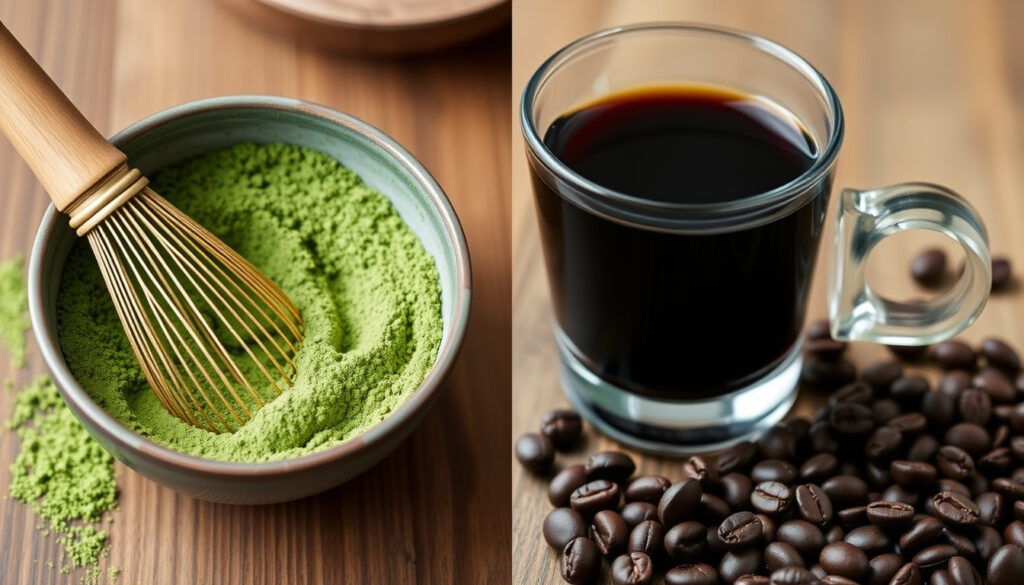
Does Matcha Have Caffeine? Caffeine Content vs Coffee
If you’ve ever sipped a matcha latte and noticed a calm, steady alertness instead of a caffeine jolt, you’ve experienced something coffee can’t quite replicate. That difference comes from a natural pairing: caffeine and an amino acid called L-theanine, which changes how your body absorbs the stimulant.
Caffeine per gram of matcha: 19–44 mg ·
Typical serving caffeine (2g): 38–88 mg ·
Average coffee caffeine (8 oz): 100–140 mg ·
L-theanine per serving: 20–50 mg ·
Antioxidant capacity (ORAC): 1384 units per gram
Quick snapshot
- Matcha contains 19–44 mg caffeine per gram (PMC biomedical research study)
- L-theanine per serving is about 20–50 mg (PMC biomedical research study)
- Caffeine absorption is slower than coffee’s (Senbird Tea retailer analysis)
- Matcha’s direct effect on chronic cortisol levels
- Whether matcha specifically increases belly fat burning beyond caffeine effect
- Exact mechanism of Gen Z’s preference over other teas
- 2016: PMC study measured mean caffeine in green tea at 16.28 mg/g (PMC biomedical research study)
- More brand-specific caffeine data expected as matcha popularity grows
- Larger trials needed to confirm matcha-cortisol link
The table below captures the key numbers behind matcha’s caffeine profile and how it stacks up against coffee.
| Property | Value |
|---|---|
| Caffeine per gram | 19–44 mg |
| Serving size (powder) | 2 g (about 1 tsp) |
| Serving caffeine range | 38–88 mg |
| Coffee 8 oz caffeine | 100–140 mg |
| L-theanine per serving | 20–50 mg |
| Daily max recommended (caffeine) | 400 mg (adults) |
Is matcha higher in caffeine than coffee?
How much caffeine is in a typical serving of matcha?
A standard matcha serving of 2 grams delivers between 38 and 88 mg of caffeine, depending on the quality and how it’s prepared. That range is lower than a typical 8‑ounce cup of drip coffee, which contains 100–140 mg (Senbird Tea retailer analysis). Per gram, matcha has 19–44 mg of caffeine, compared to about 10–20 mg per gram of coffee grounds — but because you use less matcha powder by weight, the cup total is smaller.
How does the caffeine in matcha compare to black tea?
A 2016 study published in PMC measured mean caffeine concentrations in commercial tea samples: green tea (including matcha) averaged 16.28 mg per gram, while black tea averaged 17.73 mg per gram (PMC biomedical research study). The same study found that black tea had slightly less L‑theanine (5.13 mg/g) than green tea (6.56 mg/g). So gram for gram, matcha and black tea are comparable in caffeine, but matcha’s L‑theanine content is higher.
Why does the caffeine in matcha feel different from coffee?
Matcha naturally contains L‑theanine, an amino acid that coffee lacks. L‑theanine helps caffeine be absorbed more slowly, producing a steadier, longer-lasting energy effect without the sudden crash (Hardtank nutrition analysis). Many drinkers report feeling “calm alertness” rather than the jitters that can come from coffee.
Coffee still wins on raw caffeine per cup, but matcha’s slower release and anxiety‑buffering L‑theanine make it a smarter choice for people who are sensitive to caffeine spikes or want sustained focus over a few hours.
Bottom line: Coffee delivers more caffeine faster, but matcha offers a viable alternative for anyone trying to reduce jitters while still getting steady energy.
Will matcha keep you awake?
How long does the caffeine in matcha last?
Because L‑theanine slows caffeine absorption, the effects can last 4–6 hours instead of the sharper 2–3 hour peak from coffee (Zen Green Tea retailer analysis). This makes matcha suitable for sustained alertness during work or study.
Can matcha cause insomnia if consumed late in the day?
Yes – if you are sensitive to caffeine, even matcha’s moderate dose (38–88 mg) can interfere with sleep when consumed in the evening. The half-life of caffeine is about 5 hours, so a 4 p.m. matcha latte could still leave active caffeine in your system at bedtime. The catch: even the L‑theanine buffer can’t eliminate caffeine’s fundamental sleep-disrupting potential.
Is matcha a good substitute for coffee for alertness?
For many people, yes. The combination of caffeine and L‑theanine provides focus without the anxious edge that coffee can trigger. One analysis notes that matcha’s “slow release” caffeine produces a “steadier, longer-lasting energy” compared to coffee (Hardtank nutrition analysis). However, if you rely on a high caffeine dose (over 150 mg) to feel alert, matcha may not be strong enough on its own.
For people with anxiety disorders or those on certain medications, even 38–88 mg of caffeine can be too much. The calming effect of L‑theanine does not eliminate caffeine’s stimulant properties – it only softens them.
Bottom line: Anyone sensitive to caffeine should avoid matcha after 4 p.m. to prevent sleep disruption, even with L‑theanine’s moderating effect.
Can matcha lower cortisol?
What is cortisol and why does it matter?
Cortisol is the body’s primary stress hormone. Chronically elevated cortisol is linked to anxiety, weight gain, and sleep disruption. Some small studies suggest that L‑theanine may reduce cortisol spikes during acute stress (PMC biomedical research study). However, no large human trials have confirmed that drinking matcha directly lowers long‑term cortisol levels.
Does L‑theanine in matcha reduce stress hormones?
L‑theanine has been shown in lab studies to promote alpha‑brainwave activity, which is associated with relaxation. One study noted that L‑theanine could “reduce cortisol levels in response to acute stress” (Naoki Matcha producer analysis). But the data is preliminary and the effects may not be large enough to replace conventional stress‑management techniques.
What does the research say about matcha and cortisol levels?
The PMC study analyzed 37 tea samples and found significant variability in both caffeine and L‑theanine content (PMC biomedical research study). This means the amount of L‑theanine you get per cup depends heavily on the specific matcha brand and how it’s prepared. The implication: the evidence linking matcha consumption to lower cortisol is suggestive but not conclusive.
Bottom line: Matcha may help blunt acute stress responses thanks to L‑theanine, but it is not a proven treatment for chronic cortisol elevation. Stressed professionals should view matcha as a supportive tool, not a replacement for sleep, exercise, or medical advice.
What are the downsides of matcha?
Can matcha cause liver problems?
Excessive intake of green tea catechins — more than 10 grams of matcha per day — may cause liver strain in susceptible individuals (Naoki Matcha producer analysis). That’s roughly 5–7 typical servings daily, which is far more than most people consume. For casual drinkers (1–2 cups per day), liver risk is extremely low.
Is matcha safe during pregnancy?
Health authorities like the World Health Organization and the American College of Obstetricians and Gynecologists recommend that pregnant people limit caffeine to 200 mg per day. One matcha serving contains 38–88 mg, so 1–2 servings are within the safe zone. But because caffeine crosses the placenta, pregnant individuals should monitor their total intake from all sources.
Does matcha contain heavy metals?
Matcha grown in contaminated soil can accumulate lead and aluminum from the environment. A study of green tea found that lead content varied widely among brands (PMC biomedical research study). Choosing matcha from reputable Japanese producers who test for heavy metals reduces this risk significantly.
Organic matcha typically has lower heavy metal risk but may cost more. Daily drinkers should invest in a transparent brand that publishes third‑party lab results.
Bottom line: Matcha is safe for most people in normal amounts. Pregnant women should stick to 1–2 servings per day and choose tested brands, while heavy consumers should limit to 4–5 g per day to avoid catechin overload.
Why is Gen Z obsessed with matcha?
What makes matcha popular on social media?
Matcha’s vibrant green color and latte aesthetics drive sharing on Instagram and TikTok. The visual appeal, combined with the ritual of whisking the powder, creates a photogenic experience that stands out from a standard coffee cup. This has turned matcha into a lifestyle symbol rather than just a beverage.
How does matcha fit Gen Z’s wellness trends?
The shift toward “functional” beverages — drinks that offer health benefits beyond hydration — aligns with Gen Z’s emphasis on mental and physical wellness. Matcha’s antioxidant load (ORAC 1384 units per gram) and balanced energy profile appeal to a generation that prioritizes “clean” ingredients and stress reduction (Hardtank nutrition analysis).
Are there differences in matcha preference between genders?
While matcha is popular across all demographics, surveys suggest that women in their 20s and 30s are the primary market for matcha lattes. This reflects broader trends: women are more likely to seek out functional beverages and share them on social media. However, the reasons — taste, health, aesthetics — overlap strongly between genders. The pattern: caffeine content is only part of the story — the L‑theanine synergy, cultural appeal, and risk profile together shape matcha’s role in different lifestyles.
The comparison table below shows how matcha’s profile differs from coffee and black tea.
| Beverage | Typical serving | Caffeine range | L‑theanine | Absorption rate |
|---|---|---|---|---|
| Matcha (2g powder) | 1 tsp (2 g) | 38–88 mg | 20–50 mg | Slow (over 4–6 h) |
| Drip coffee | 8 oz | 100–140 mg | None | Fast (peak 1–2 h) |
| Black tea (1 bag) | 8 oz | 35–70 mg | About 5–10 mg | Moderate |
Upsides and downsides of matcha as a caffeine source
Upsides
- Sustained energy without jitters or crash
- High antioxidant content (ORAC 1384 units/g)
- L‑theanine promotes calm focus
- Lower caffeine dose suitable for sensitive individuals
Downsides
- Less caffeine per cup than coffee
- Can disrupt sleep if consumed late
- Heavy metal risk if not sourced carefully
- Higher cost per serving than coffee
The implication: for the average adult who drinks one matcha latte daily, the choice is straightforward — moderate caffeine with a unique calming side effect. For anyone pregnant, caffeine‑sensitive, or looking for a strong morning boost, the trade‑offs are different.
What we know and what remains unclear
Confirmed facts
- Matcha contains caffeine at 19–44 mg/g
- L‑theanine content is about 20–50 mg per serving
- Caffeine absorption is slower than coffee
What’s unclear
- Matcha’s direct effect on chronic cortisol levels
- Whether matcha specifically increases belly fat burning beyond caffeine effect
- Exact mechanism of Gen Z’s preference over other teas
“Matcha contains 19–44 mg of caffeine per gram, according to Healthline’s nutrition analysis.”
Healthline health information publisher
“BBC notes that matcha contains much higher levels of caffeine than other green teas.”
BBC Bitesize educational publisher
“General guideline: pregnant women should limit caffeine to 200 mg per day.”
Mayo Clinic medical institution
What this means: matcha is not a coffee replacement for everyone — it is a distinct category that works best when matched to your specific energy needs and lifestyle.
Frequently asked questions
Does matcha have more caffeine than green tea?
Yes. Because matcha uses the whole ground tea leaf, it has a higher caffeine content than steeped green tea, which generally contains about 35 mg per cup (Naoki Matcha producer analysis).
Can you drink matcha on an empty stomach?
Some people find matcha harsher on an empty stomach due to its high catechin content. Consuming it after food or with milk can reduce potential irritation.
Is matcha safe for children?
In small amounts (e.g., half a serving), matcha is generally safe for children over 12, but caffeine intake should be limited. The American Academy of Pediatrics advises against caffeine for children under 12.
Does matcha interact with medications?
Matcha can interact with blood thinners (e.g., warfarin) due to its vitamin K content, and with stimulant medications for ADHD. Consult a doctor if you take prescription drugs.
How much matcha is too much per day?
Consuming more than 10 grams (approximately 5 servings) per day may risk liver strain from catechins. Most adults can safely drink 1–3 servings.
Does matcha cause dehydration?
Matcha is a mild diuretic due to its caffeine, but the water content of the beverage offsets any fluid loss. It contributes to hydration like other caffeinated drinks.
Can matcha help with weight loss?
Matcha may slightly boost metabolism due to its caffeine and catechin content, but any effect is modest. It is not a substitute for diet and exercise.
More related posts
 Liam Nee on and Pamela Ander on Relation hip: Are They Together?
 Villarreal vs Real Madrid: H2H, Latest Result & Predictions
 Houses for Sale Wigan: Rightmove, Zoopla & Listings
 Pound to Pakistani Rupees: Live Rate & Transfer Guide
 Jason Bateman Movies and TV Shows: Complete Filmography
 Area of a Circle – Formula and Step-by-Step Examples
 Simon Neil: Biography, Personal Life, and Football Club
 Quadrant Department Store Closure – Swindon Facts and Timeline
