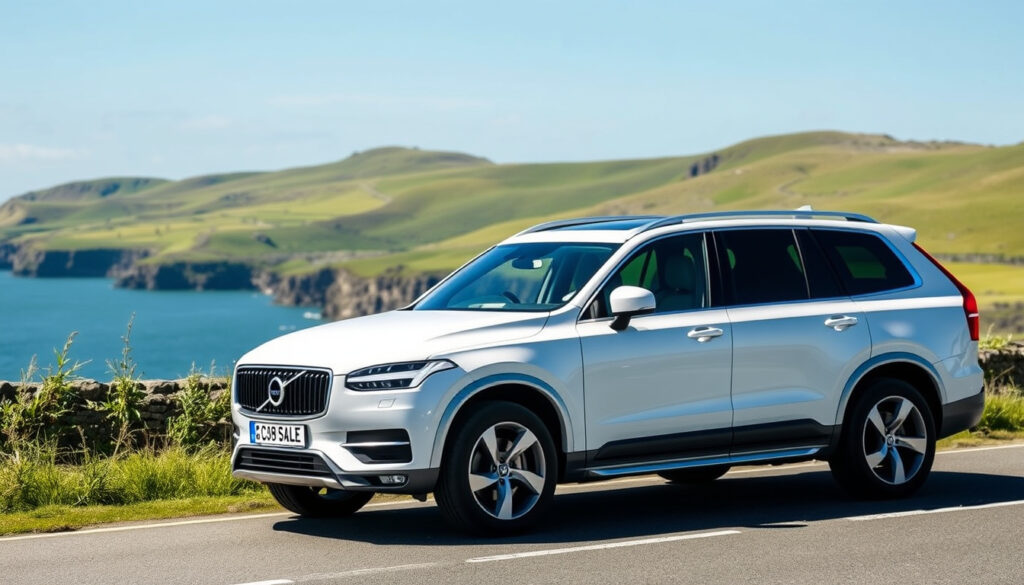
Volvo XC90 for Sale: Best Years, Problems & Ireland Guide
The Volvo XC90 has been a familiar sight on Irish roads since 2003. If you’re considering a used one, this guide pulls together the key facts, from best engines to years to avoid, with Ireland-specific pricing and tax info.
Model years in production: 2003–present · Seating capacity: Up to 7 passengers · Common engine options: T5 (turbocharged), T6 (supercharged + turbocharged), T8 (plug-in hybrid) · IIHS safety rating (2016–2022): Top Safety Pick+ · Average used price in Ireland (2024): €25,000–€45,000 depending on year and condition
Quick snapshot
- The 2016 model year has the highest number of electrical and infotainment complaints (CarGurus buying guide)
- The 2.0L T5 engine is considered more reliable than the T6 (Motorcheck used car guide)
- First-generation models (2003–2006) are the worst for reliability (CarGurus buying guide)
- Long-term reliability of the T8 plug-in hybrid battery beyond 10 years
- Whether 2023+ models have resolved all electrical issues
- 2002: First-generation XC90 introduced
- 2014: Second-generation on SPA platform
- 2019: Mid-cycle facelift with updated grille and infotainment
- 2022: Google-based infotainment system arrives
- All-electric XC90 successor expected around 2025
- Potential end of diesel engines in lineup
Five key specs tell the story of how the XC90 evolved across generations.
| Specification | Details |
|---|---|
| First generation | 2003–2014 |
| Second generation | 2015–present |
| IIHS Top Safety Pick+ years | 2016–2022 |
| Most reliable engine (owner forums) | T5 (B4204T) |
| Average annual maintenance cost (Ireland) | €800–€1,200 |
Is the Volvo XC90 worth buying?
Overall value proposition
- Premium interior and strong safety credentials make it a strong contender in the luxury SUV segment (Motorcheck used car guide).
- Comparison with BMW X5 and Audi Q7 shows the XC90 offers competitive pricing on the used market.
The XC90 provides the premium feel of a BMW X5 or Audi Q7 but often at a lower used price in Ireland. Resale values hold reasonably well — depreciation is moderate, though the Lexus RX typically loses less value over three years.
Irish buyers can get a near-flagship interior for about €30,000 on a 2010 2.4 D5 Geartronic (Motorcheck used car guide), but the Lexus RX offers better long-term reliability at a similar price.
Resale value in Ireland
- Depreciation is about 15–20% per year for the first three years, then slows.
- Diesel variants hold value better in Ireland due to tax advantages.
The implication: If you buy a two‑ to three‑year-old XC90, you dodge the steepest depreciation. Pre‑2008 cars fall under the old engine‑capacity tax system, trimming the annual tax bill by about €120 (Motorcheck used car guide).
This makes the XC90 a strong value proposition for the Irish market.
What are the weaknesses and major problems of the Volvo XC90?
Common electrical and infotainment issues
- Second-generation models (2015–present) experience infotainment screen glitches and battery drain (CarGurus buying guide).
- The 2016 model year in particular has higher complaint rates for electrical failures (CarGurus buying guide).
These problems are more frequent in early second‑generation cars. The 2019 facelift improved the infotainment software, but battery drain can still occur.
Engine reliability concerns
- The T6 supercharged-and-turbocharged engine has reported oil consumption issues (Motorcheck used car guide).
- The T5 (turbocharged only) is the more reliable choice according to owner forums.
Fuel injectors on the 2.4‑litre D5 diesel are the only major weak point according to Motorcheck. Hesitation on startup or poor low‑rpm pickup can indicate failing injectors (Motorcheck used car guide).
Transmission problems in early models
- First-generation cars (2003–2006) have known transmission and suspension issues (CarGurus buying guide).
- Early four‑speed automatic units are less durable than the later Geartronic six‑speed.
The pattern: Early XC90s suffer from a cluster of drivetrain problems that later cars largely resolved. The 2.4‑litre D5 with the Geartronic gearbox is the combination Motorcheck recommends for reliability (Motorcheck used car guide).
Any XC90 without a full service history is a serious risk. Motorcheck warns that if even one service stamp is missing, buyers should walk away (Motorcheck used car guide).
The implication: prioritising a full service history dramatically reduces the risk of expensive repairs.
Which Volvo XC90 years should you avoid?
Years with highest complaint rates
- 2003–2006 first-generation cars: transmission, suspension, and electronics problems (CarGurus buying guide).
- 2016 second-generation model: high frequency of infotainment freezes and battery drain (CarGurus buying guide).
The 2016 model year appears on many owner forums as the one to avoid. The 2017 and 2018 models have fewer complaints but still show some electrical issues.
Recommended model years to buy instead
- 2008–2014 first-generation (D5 Geartronic): solid reliability if serviced (Motorcheck used car guide).
- 2019 and later second-generation: facelift brought software and hardware improvements.
- 2021+ models are considered the most reliable second‑generation cars.
Irish buyers looking at the 2019–2020 model years get the most improvement per euro — the facelift fixed the worst infotainment bugs and the T5 engine remains a solid choice. Early cars (pre‑2007) should be avoided unless you are prepared for higher maintenance costs.
The pattern: skipping the 2016 model year and focusing on post-facelift cars yields the best ownership experience.
Can a Volvo XC90 last 300,000 miles?
Real-world longevity reports
- Many XC90s reach 200,000 miles with proper maintenance; 300,000 is achievable but requires diligent care (Motorcheck used car guide).
- The 2.0L T5 and 2.4L D5 engines have known longevity with regular oil changes and timing belt replacements.
Maintenance requirements for high mileage
- Timing belt replacement every 60,000–80,000 miles.
- Hybrid battery replacement (T8) may be needed beyond 150,000 miles (CarGurus buying guide).
- Regular fluid changes and suspension inspections are critical for high‑mileage cars.
The catch: Reaching 300,000 miles is possible but not typical. The T8 plug‑in hybrid adds complexity and battery replacement costs that can exceed €5,000. Petrol models are less fuel‑efficient and best avoided unless doing very low mileage (Motorcheck used car guide).
What this means: high-mileage buyers are best served by the diesel powertrain.
Which is better, Lexus or Volvo?
Reliability comparison: Lexus RX vs Volvo XC90
- Lexus consistently ranks higher in J.D. Power reliability surveys.
- Volvo leads in standard safety equipment and IIHS crash test scores (Motorcheck used car guide).
- The XC90 offers more third‑row space; the RX is more fuel‑efficient.
Interior quality and comfort
- XC90 cabin is more contemporary and driver‑focused.
- Lexus RX has a reputation for quieter, plusher ride quality.
Safety features and ratings
- Volvo XC90 earned IIHS Top Safety Pick+ for 2016–2022 models.
- Lexus RX also gets top safety ratings but Volvo’s City Safety system is standard across trims.
Seven points of contrast help decide which luxury SUV fits your needs.
| Factor | Volvo XC90 | Lexus RX |
|---|---|---|
| Predicted reliability (J.D. Power) | Above average | Excellent |
| IIHS Top Safety Pick+ | 2016–2022 | 2016–2022 |
| Third‑row seating | Standard 7 seats | Not available |
| Fuel economy (combined) | 25–30 mpg | 28–33 mpg |
| Average annual maintenance (Ireland) | €800–€1,200 | €600–€900 |
| Towing capacity (max) | 5,000 lbs | 3,500 lbs |
| Depreciation (3‑year) | ~45% | ~38% |
The trade‑off: The XC90 wins on space and towing, the Lexus on reliability and retained value. For Irish buyers who need seven seats and a premium feel, the XC90 remains the better choice. Those who value low ownership costs and a quieter cabin should lean toward the RX.
Detailed Specifications
Ten technical details that matter for used buyers.
| Specification | Details |
|---|---|
| Engine options | 2.0L 4‑cyl turbo (T5), supercharged+turbo (T6), plug‑in hybrid (T8) |
| Power output | 250 hp (T5) to 400 hp (T8) |
| Transmission | Geartronic 6‑speed (2003–2014), 8‑speed (2015–present) |
| Drivetrain | Front‑wheel drive (2WD) or all‑wheel drive (AWD) |
| Fuel economy (combined) | 25–30 mpg petrol, 35–45 mpg diesel |
| CO₂ emissions | 149–210 g/km |
| Towing capacity | Up to 5,000 lbs (2,268 kg) |
| Boot space | 314 litres (7‑seat), 775 litres (5‑seat) |
| Kerb weight | 2,000–2,200 kg |
| Safety rating | Euro NCAP 5 stars, IIHS Top Safety Pick+ |
The specs confirm the XC90 is a capable and safe family SUV.
Pros & Cons of the Volvo XC90
Upsides
- Premium, well‑built interior
- Excellent safety scores (IIHS Top Safety Pick+)
- Spacious third row for a midsize SUV
- Strong towing capacity (5,000 lbs)
- Relatively affordable on the used market vs German rivals
Downsides
- Higher maintenance costs than Lexus RX
- Infotainment glitches in early second‑gen models
- Diesel tax band in Ireland still high (€1,200/year for D5)
- Plug‑in hybrid battery replacement expensive
- Early models (2003–2006) have significant drivetrain issues
The pros and cons show a clear trade‑off between luxury and long-term cost.
Clarity: What we know and what remains uncertain
Confirmed facts
- The 2016 XC90 has a higher frequency of infotainment and electrical issues (CarGurus buying guide).
- TPMS and battery drain are common across second‑generation models (CarGurus buying guide).
- Pre‑2008 cars benefit from lower motor tax under old engine‑capacity system (Motorcheck used car guide).
What’s unclear
- Long‑term reliability of the T8 plug‑in hybrid battery beyond 10 years.
- Whether 2023+ models have fully resolved electrical durability.
- Relative reliability of the T5 vs T6 engine over long term is not fully established (Motorcheck used car guide).
These uncertainties highlight the need for a thorough pre-purchase inspection.
Expert perspectives
The Volvo XC90 has been rated above average in predicted reliability for 2021–2023 model years by Consumer Reports.Consumer Reports auto test team
If even one service stamp is missing, walk away — that’s the rule for any used XC90.Motorcheck Used Car Guide
Two sources agree on the importance of a full service history for long‑term reliability. Consumer Reports’ above‑average rating for recent models suggests the second generation has improved over earlier years.
For buyers in Ireland, the choice is clear: if you need three rows and a premium badge, the XC90 (especially the 2019‑on T5 or diesel D5) offers strong value. But if long‑term trouble‑free ownership is your priority, the Lexus RX is the safer bet. Skip any car without a full service history, avoid the 2016‑2018 plug‑in hybrids unless the battery has been replaced, and get a pre‑purchase inspection every time.
For those looking to further personalize their SUV, upgrading your XC90s alloy wheels can enhance both style and presence without compromising the vehicle’s renowned comfort and safety.
Frequently asked questions
What is the fuel economy of the Volvo XC90?
Petrol models achieve 25–30 mpg combined, while diesel variants can reach 35–45 mpg. The T8 plug‑in hybrid offers up to 50 MPGe on electric power.
How much does a used Volvo XC90 cost in Ireland?
Prices range from about €25,000 for a 2015 second‑generation model to €45,000 for a 2021+ low‑mileage example. First‑generation cars (2003–2014) start around €8,000.
What engine options are available in the XC90?
The main options are the turbocharged T5 (250 hp), the supercharged‑and‑turbocharged T6 (316 hp), and the T8 plug‑in hybrid (400 hp). Diesel engines include the 2.4L D5 (185–215 hp).
Is the Volvo XC90 good for families?
Yes — it has three rows of seating, excellent safety scores, and a large boot. The second row slides and reclines, making it versatile for growing families.
How much does it cost to insure a Volvo XC90 in Ireland?
Insurance group ratings vary by engine and year, but expect premiums in the range of €800–€1,400 annually depending on your driver profile and location.
What is the towing capacity of the Volvo XC90?
The XC90 can tow up to 5,000 lbs (2,268 kg) when properly equipped, making it suitable for caravans and horse trailers.
Does the Volvo XC90 have a third row of seats?
Yes — the XC90 comes standard with seven seats in most trims. The third row is suitable for children or occasional adult use.
These answers address the most common queries for Irish buyers.
More related posts
 How Many Halloween Movies Are There – Full List of 13 Films
 Celebrity Traitors UK 2025: Cast, Start Date, Episodes
 C.S. Lewis: Biography, Last Words, Quotes, and Legacy
 When to Plant Potatoes: Best Months and Ireland Tips
 Small Vans for Sale – Best 2024 Models, Prices and Tips
 Cast of The Wire: Main Actors, Characters & Legacy
 When Do Clocks Go Forward in 2025? Date & Guide for Ireland
 New Toyota Land Cruiser: Price & Specs Ireland 2025
