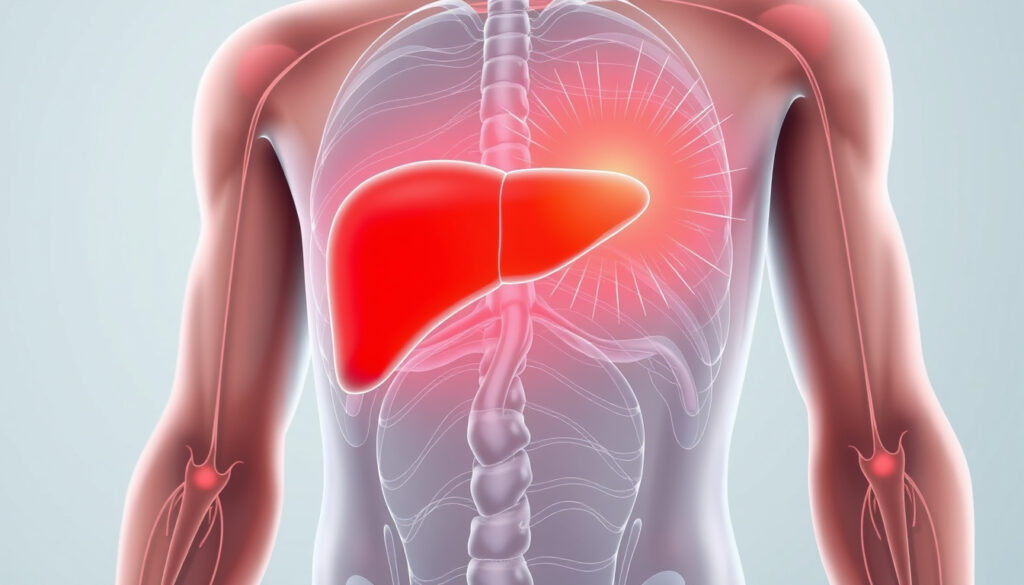
Where Is Your Liver? Location, Pain, and Signs of Trouble
You probably know your liver is important, but do you know exactly where it sits or what it does day to day? For most people, the liver stays out of mind until a dull ache or a lab result raises a question. Here’s a straightforward look at where to find it, how to recognize when it’s struggling, and what you can actually do about it.
Location: Right upper abdomen, under the ribs · Weight: Up to 4 pounds (1.8 kg) · Size: About the size of a football · Functions: Over 500 known functions · Regeneration: Can regenerate after damage
Quick snapshot
- Liver sits on the right side of the upper abdomen, under the ribs (Cleveland Clinic)
- Weighs between 3 and 5 pounds (American Liver Foundation)
- Performs over 500 vital tasks including bile production, glucose storage, and toxin removal (Stanford Children’s Health)
- Whether any drink can truly “flush” or detox the liver in a medically meaningful way
- Exactly how much alcohol is safe for long-term liver health varies widely between individuals
- Early fatty liver can reverse within weeks of diet change; cirrhosis develops over years and is permanent (Mayo Clinic)
- Persistent right-upper-abdomen pain lasting more than a few days warrants medical evaluation (Mayo Clinic)
- Focus on whole-food diet, regular exercise, and limiting alcohol to support liver health
- Blood tests (ALT, AST) can screen for liver damage — ask your doctor if you have risk factors
Five key facts about your liver, one pattern: the organ is compact yet remarkably multifunctional.
| Attribute | Detail |
|---|---|
| Location | Right upper abdomen, under the ribs (Cleveland Clinic) |
| Weight | 3–5 pounds (1.4–2.3 kg) (American Liver Foundation) |
| Color | Dark reddish-brown (NIH/PMC) |
| Lobes | Two — right lobe (larger) and left lobe (American Liver Foundation) |
| Known functions | Over 500, including bile production, glucose storage, blood clotting, and toxin removal (Stanford Children’s Health) |
| Bile production | Breaks down fats during digestion |
| Glucose regulation | Stores and releases glucose as the body needs it |
| Blood clotting | Helps regulate clotting factors |
| Bilirubin removal | Removes bilirubin; buildup causes jaundice (NHS) |
| Drug metabolism | Processes medications and toxins; impaired liver affects drug safety |
| Regeneration | Can regrow after partial surgical removal or acute injury |
Where is your liver left or right?
Where exactly is the liver located in the body?
- The liver sits in the upper right part of the abdomen, beneath the diaphragm and above the stomach, right kidney, and intestines.
- It is predominantly on the right side of the body, so pain from liver enlargement or inflammation is typically felt in the right upper quadrant rather than the left.
Think of the liver as a wedge-shaped organ tucked under your right rib cage. It spans from the right side toward the midline, which is why some people feel discomfort in the center or just to the right of center, not all the way out toward the side.
What side is your liver on?
- Your liver is on the right side of your upper body, under the ribs, next to the stomach.
- From the back, the liver sits deep behind the lower right ribs, near the level of the 11th and 12th ribs.
The liver has two major lobes — a larger right lobe and a smaller left lobe. The left lobe extends slightly across the midline, which is why a noticeably enlarged liver can sometimes be felt on the left side too.
If you feel pain on the left side of your upper abdomen, your liver is unlikely to be the cause. The gallbladder, pancreas, spleen, or even a pulled muscle are more plausible suspects. Right-sided upper abdominal pain, however, should always be checked.
The pattern: your liver is firmly a right-side organ, but its left lobe crosses the midline just enough to cause confusion. If you feel pain on the left, look elsewhere first.
Where would you feel liver pain?
What does liver pain feel like?
- Liver pain is often described as a dull, aching discomfort in the upper right abdomen rather than a sharp, pinpoint sensation (Healthline).
- The liver itself has few pain fibers; most discomfort comes from stretching of the organ’s capsule (Glisson’s capsule) when the liver swells.
Liver pain can also feel like a persistent pressure under the right ribs. It rarely comes and goes quickly — it tends to linger. If you experience sharp, stabbing pain, the source is often the gallbladder, ribs, or a muscle strain rather than the liver itself.
Where do you feel liver pain in your back?
- The liver can cause referred pain to the right shoulder or back because irritation can affect the diaphragm and nearby structures (Mountain Springs Recovery).
- Pain that radiates to the right shoulder blade or between the shoulder blades may signal liver or gallbladder involvement.
This referred pain happens because the phrenic nerve — which supplies the diaphragm — also sends signals to the right shoulder and neck. When the liver inflames and irritates the diaphragm, your brain interprets the signal as coming from the shoulder, even though the problem is below it.
Gallbladder pain, often mistaken for liver pain, tends to be sharper, comes in waves after fatty meals, and may radiate to the back more suddenly. Liver pain is steadier and more of a constant ache. Differentiating the two requires imaging — don’t self-diagnose.
The trade-off: liver pain is a late sign. By the time you feel discomfort, the organ has usually been inflamed or enlarged for a while. That’s why early symptoms — not pain — matter more for catching problems early.
What are the first signs of a bad liver?
What are early symptoms of liver disease?
- Jaundice — yellowing of the skin and eyes — is one of the earliest and most visible signs.
- Dark urine and pale, tar-colored, or black stools can indicate bile-flow problems.
- Persistent fatigue is among the most common nonspecific symptoms (Merck Manual Consumer Version).
Jaundice happens when the liver can’t remove bilirubin fast enough. Bilirubin is a yellow pigment produced when red blood cells break down. Normally the liver processes it and sends it to the intestines. When the liver struggles, bilirubin builds up in the blood and spills into the skin and eyes.
How to know if your liver is struggling?
- Loss of appetite and nausea are common, especially in hepatitis and more advanced liver disorders.
- Swelling in the legs or abdomen (ascites) and a tendency to bruise easily are later signs that require immediate medical attention.
- Itching (pruritus) can be a symptom of cholestasis or other bile-flow disorders.
Fatigue from liver disease is different from ordinary tiredness — it’s a deep, unrelenting exhaustion that doesn’t improve with rest. Combined with any of the other signs, it’s a strong signal to get liver enzymes checked.
What this means: early liver disease often has no pain. By the time you feel something, the damage may already be significant. Jaundice, dark urine, and unexplained fatigue are your body’s way of saying the liver needs attention now.
What is the best drink to flush your liver?
Can water flush your liver?
- Water supports all liver functions by maintaining blood volume and helping the kidneys filter waste, but it does not “flush” the liver in a detox sense.
- The liver doesn’t need to be flushed — it works continuously to filter blood, metabolize toxins, and produce bile.
No credible medical study shows that any specific drink can meaningfully “cleanse” the liver. The organ is self-cleaning when it’s healthy. The best support you can give it is adequate hydration — plain water — so that blood volume stays optimal and the kidneys can handle waste products the liver processes.
What about coffee or green tea?
- Some studies suggest coffee may help reduce liver enzyme levels and lower the risk of liver fibrosis and cirrhosis.
- Green tea contains antioxidants (catechins) that may offer some protective effects, but evidence is mixed and doses in tea are low.
The idea of a “liver detox drink” sounds appealing, but the evidence doesn’t support it. Your liver doesn’t accumulate toxins that need to be “flushed” — it processes them continuously. The most effective way to support liver function is to stop putting extra strain on it: reduce alcohol, cut ultra-processed foods, and maintain a healthy weight.
The implication: if you see a product labeled “liver cleanse” or “detox tea,” treat it as marketing, not medicine. Water, coffee (in moderation), and a balanced diet are far more effective than any overpriced bottle.
Can liver damage be reversed?
How to reverse fatty liver?
- Fatty liver disease — when fat builds up in liver cells — can be reversed with weight loss, exercise, and dietary changes.
- A loss of 5–10% of body weight can significantly reduce liver fat and inflammation.
Fatty liver is the most common liver condition in many countries, and it’s also the most reversible. Cutting added sugars (especially fructose from soda and sweets), increasing fiber from vegetables and whole grains, and doing moderate aerobic exercise most days can bring liver enzymes back to normal within weeks to months.
How fast can the liver heal?
- The liver has remarkable regeneration ability — it can regrow to full size even after 70–80% of it is removed (as in living-donor transplants).
- Cirrhosis — permanent scarring of the liver — cannot be reversed, though progression can be slowed.
The liver is one of the few organs that can regenerate. If the underlying cause is removed — whether it’s alcohol, excess fat, or a viral infection — the liver can repair damaged cells and restore function. But once scar tissue replaces healthy tissue (cirrhosis), the damage is permanent. That’s why catching liver problems early makes such a difference.
The trade-off: fatty liver is reversible; cirrhosis is not. The window for reversal is wide — years, usually — but it closes once significant scarring develops. If you have risk factors (obesity, diabetes, heavy drinking), ask for a liver enzyme test today, not next year.
Steps for better liver health
- Limit alcohol. The NHS advises no more than 14 units per week (about 6 pints of beer or 10 small glasses of wine) with several alcohol-free days.
- Maintain a healthy weight. Excess body fat, especially around the abdomen, increases fatty liver risk.
- Eat a whole-food diet. Prioritize vegetables, fruits, lean proteins, and whole grains. Limit added sugars and refined carbs.
- Exercise regularly. Aim for 150 minutes of moderate activity (brisk walking, cycling) per week.
- Avoid unnecessary medications and toxins. The liver metabolizes almost everything you ingest. Use over-the-counter drugs sparingly and avoid mixing them with alcohol.
- Get vaccinated. Hepatitis A and B vaccines are available and can prevent viral liver infections.
- Get screened. A simple blood test (ALT, AST, GGT) can detect early liver damage. Ask your doctor during your next checkup.
Your liver doesn’t need a detox program or a special tea. It needs you to stop damaging it and give it the raw materials (water, whole foods, exercise) it uses to maintain itself. The single most effective step: lose excess weight and reduce alcohol.
The implication: small daily habits compound into significant liver protection over time — start with one change this week.
Confirmed facts and what remains unclear
What we know for sure
- The liver is located on the right side of the upper abdomen, under the ribs.
- The liver can regenerate after damage.
- Fatty liver disease is reversible with lifestyle changes.
- Jaundice and dark urine are early warning signs of liver trouble.
- The liver performs over 500 essential functions.
What remains unclear
- Whether any specific drink effectively “detoxes” or “flushes” the liver beyond what basic hydration provides.
- Whether moderate alcohol consumption is always harmful or can be safe for some individuals — susceptibility varies widely.
- The exact role of coffee and green tea in preventing liver disease progression requires more controlled trials.
- Why some people develop severe liver disease with minimal risk factors while others with heavy exposure do not.
- How quickly individual livers progress from fatty liver to cirrhosis is not fully predictable.
The pattern: what remains unknown centers on individual variability — no universal threshold exists for alcohol safety, detox efficacy, or disease progression speed.
Expert perspectives on liver location and health
Your liver is on the right side of your body, just under your ribs.
— British Liver Trust
The liver is on the right side of the upper body, under the ribs, next to the stomach.
— Cleveland Clinic (Digestive Health Institute)
The liver is the body’s largest internal organ. It sits in the upper right part of the abdomen, beneath the diaphragm and above the stomach, right kidney, and intestines.
— Stanford Children’s Health (Pediatric Gastroenterology)
Early signs of liver disease include jaundice, dark urine, and pale, tar-colored stools. Fatigue and loss of appetite are also common.
— Merck Manual (Consumer Version)
For anyone wondering where their liver is or what early trouble looks like, the message from every major health authority is the same: know your right side, watch for jaundice and fatigue, and don’t wait for pain to act. For someone carrying excess weight or drinking regularly, the choice is straightforward: get liver enzymes checked this year, or risk discovering the damage when it’s too late to reverse. An annual blood test takes five minutes and can save you years of regret.
Understanding where the liver sits is essential because this organ performs over 500 critical functions, yet it often stays silent until trouble arises.
Frequently asked questions
What does the liver do?
The liver performs over 500 functions, including producing bile to digest fats, storing glucose for energy, filtering toxins from the blood, regulating blood clotting, and removing bilirubin. It’s essentially the body’s main chemical processing plant.
How can I check my liver health?
A simple blood test measures liver enzymes (ALT, AST, ALP, GGT) and bilirubin levels. Your doctor can order these during a routine checkup. If results are abnormal, imaging such as ultrasound or FibroScan may be recommended.
Is liver pain a sign of something serious?
Yes — liver pain often indicates the organ is enlarged or inflamed. While it can be caused by a temporary condition like acute hepatitis or a fatty liver flare, persistent right-upper-quadrant pain should always be evaluated by a doctor to rule out more serious problems.
How much alcohol damages the liver?
The NHS recommends no more than 14 units per week (about 6 pints of beer or 10 small glasses of wine) with several alcohol-free days. Regular drinking above this level increases the risk of alcoholic liver disease, but individual susceptibility varies based on genetics, diet, and overall health.
Can a liver detox cleanse work?
No credible medical evidence supports the effectiveness of “liver detox” products. The liver is self-cleaning when healthy. The best way to support it is to reduce alcohol, maintain a healthy weight, eat whole foods, and stay hydrated. Save your money on detox teas and invest in vegetables instead.
Does the liver hurt when it is inflamed?
Yes, but the pain is typically a dull, persistent ache in the upper right abdomen rather than a sharp pain. The liver itself has few pain nerves — the sensation comes from stretching of the organ’s outer capsule. Inflammation can also cause referred pain to the right shoulder or back.
What fruits aid liver health?
Grapefruit, berries, grapes, and citrus fruits contain antioxidants and compounds that may support liver enzyme function. However, no single food “cleanses” the liver — a balanced diet rich in whole plant foods is the most effective approach.
What are the four warning signs of a dying liver?
Advanced liver failure typically presents with severe jaundice, abdominal swelling (ascites), confusion or drowsiness (hepatic encephalopathy), and easy bleeding or bruising. These symptoms require emergency medical care.
More related posts
 Highest Mountain in the World: Everest, Mauna Kea & More
 Aljaž Škorjanec Janette Manrara Announcement – Pregnancy Reveal and Strictly Updates
 What Side Is Your Appendix On? Location, Pain & Signs
 Angling Direct Discount Code: 30% Off Verified for May 2026
 Michael Crawford: Phantom Legend’s Life and Latest News
 The Air India Plane Cra h Pilot: Sabharwal & Kunder
 Kiara Advani: Biography, Age, Religion, Marriage & Family Loss
 Pension Fund Inheritance Tax Changes 2027: UK Rules Explained
