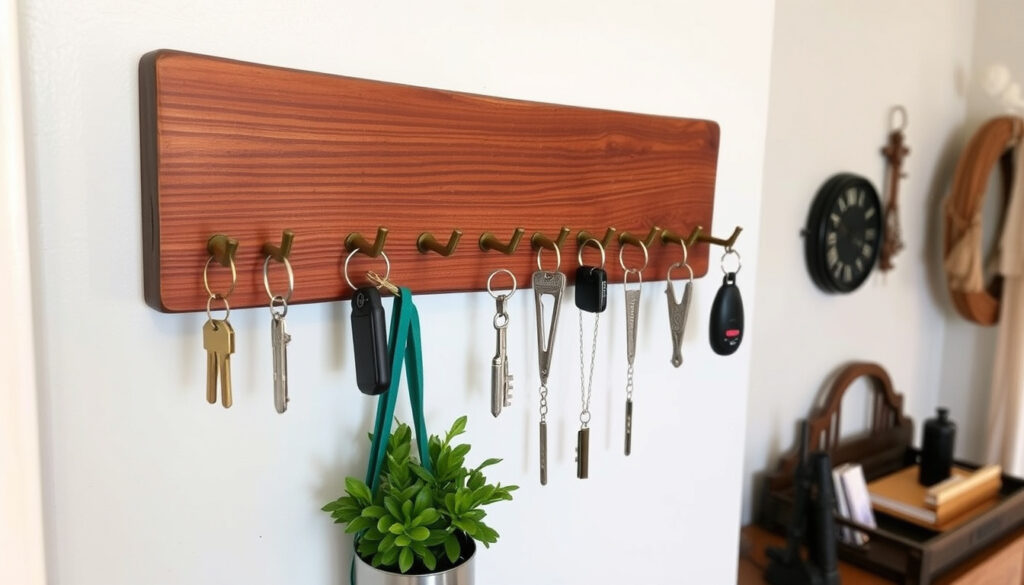
Key Holder for Wall: Best Options, DIY Guide, and Placement Tips
There’s that moment every morning—patting pockets, checking bags, circling back to the sofa. A wall key holder can end that ritual, but only if you pick the right one and put it in the right spot.
Average price range: €10 – €30 (Amazon Ireland) · Typical number of hooks: 4 – 6 · Common materials: Wood, metal, plastic · Installation time: 10 – 15 minutes · Most popular style: Wall-mounted with tray
Quick snapshot
- Wall-mounted key holders come in wood, metal, or adhesive-backed products (Furniture Designs, buying guide)
- Installation uses nails, screws, or double-sided tape (Furniture Designs)
- The Home Depot recommends using a level and locating studs before mounting (The Home Depot, DIY guide)
- Pine and Poplar’s guide advises clamping glued parts within 5–10 minutes (Pine and Poplar, DIY blog)
- Optimal number of keys per holder varies by household size and usage habits.
- Long-term durability of cheap plastic key holders compared with wood or metal remains unverified.
- Average installation takes 10–15 minutes (The Home Depot)
- Choose material and style, then mount securely using the correct hardware for your wall type.
Four key facts, one pattern: the smartest buy balances material quality, hook count, and proper installation for your wall surface.
| Fact | Value |
|---|---|
| Price range | €10 – €30 (Amazon Ireland, per Furniture Designs buying guide) |
| Typical number of hooks | 4 – 6 (Furniture Designs recommends more hooks for households with many keys) |
| Top retailers | Amazon, Etsy, Wayfair |
| Average installation time | 10 – 15 minutes (The Home Depot) |
What are the rules for key holders?
Placement near the main entry
- Mount your key holder within five feet of the main door so you can grab keys on the way out and drop them on return (Furniture Designs mentions key holders are commonly placed near entryways).
- Avoid mounting directly opposite the door; according to Vastu consultants on NoBroker Forum, this can disrupt energy flow. (Note: NoBroker Forum is a community platform; treat as general advice.)
Bottom line: Entryway is best, but keep the key holder out of direct line of sight from outside to prevent thieves from spotting it.
Security rules to prevent theft
- Never hide spare keys under mats, plant pots, or above door frames. Home security firm Vivint notes these are the first places burglars check.
- Consider a key holder with a lockable box if you keep keys near a window.
The pattern: thieves are opportunistic. A visible hook near a window is easy, but a well-placed, sturdy holder behind the door adds friction.
Key fob security: aluminum foil trick
- Wrapping your key fob in aluminum foil blocks RFID signals, preventing relay attacks. This is widely recommended by automotive security experts.
The implication: for the cost of a few cents, you can add an extra layer of protection against car theft.
What is the best key organizer?
Materials: wood vs metal vs plastic
- Wood: Aesthetic and warm, but more expensive (Furniture Designs notes wooden versions are pricier).
- Metal: Durable and heavy-duty, ideal for multiple keys.
- Plastic: Budget-friendly but may wear faster over time.
Key holders with extra storage
- A tray or shelf holds mail, coins, and masks. Pine and Poplar offers a DIY mountain-shelf design that combines shelf and hooks.
- Pine and Poplar’s guide uses cup hooks in the bottom of a box for extra hanging space (The Home Depot suggests similar for their box-style holder).
Heavy-duty options
- Metal key holders with reinforced backing can support 10+ keys. For families, choose a model with at least 6 hooks (Furniture Designs recommends matching hook count to household size).
Wood looks better but costs more. Metal lasts longer. Plastic saves money upfront but may need replacing sooner. For heavy use, invest in metal.
Comparison: key holder styles
Three styles, one decision point: how much extra storage do you need each day?
| Style | Hooks | Extra storage | Best for |
|---|---|---|---|
| Basic hook | 4–6 | None | Singles or couples |
| With tray/shelf | 4–6 | Mail, coins, keys | Entryway organization |
| Heavy-duty | 6–10 | Often includes shelf | Families or shared spaces |
The catch: more storage means a bigger footprint. Make sure your wall space can accommodate the width and depth.
Upsides
- Keeps keys in one known spot – no more searching.
- Wall-mounted frees up counter space.
- DIY options let you customise material and size.
Downsides
- Permanent installation – re-positioning needs wall repair.
- Low-quality plastic may break within a year.
- Buyers with long hallways may need two holders.
How to make a key holder DIY?
Materials needed
- Wood board or box (size 10–100 cm, per Furniture Designs dimension range)
- Hooks (cup hooks work well – The Home Depot suggests these for extra hanging)
- Wood glue, nails (1.25-inch, per Pine and Poplar)
- Sandpaper (80 to 220 grit progression – Pine and Poplar)
- Drill, screws, wall anchors, level
Step-by-step wooden key holder
- Cut and sand the board – start with 80 grit, work up to 220 grit (Pine and Poplar).
- Glue and clamp – apply wood glue, clamp within 5–10 minutes (Pine and Poplar), then wait 24 hours before sanding.
- Attach hooks – screw cup hooks into the bottom of the box or board (The Home Depot).
- Finish – stain and spray with polyurethane; if painting, avoid painting drawer slides or interior box surfaces (The Home Depot).
- Mount – locate studs with a stud finder, drill pilot holes, and secure with screws and wall anchors if only one stud is available (The Home Depot).
The conclusion: DIY key holders offer customization but require patience for proper clamping and finishing.
Where to put a key holder in a home?
Entryway placement
- Mount within 5 feet of the main door for convenience.
- Keep it out of direct line of sight from outside to avoid advertising that keys are there.
Kitchen or hallway alternatives
- If entryway lacks wall space, the kitchen near the back door or a hallway near the door works.
- A second holder by the back door helps if you use a side entrance daily.
Vastu and Feng Shui guidelines
- Vastu sources (including NoBroker Forum) recommend placing the key holder in the north or east direction of the home.
- Avoid putting it directly opposite the main entrance – it’s said to block the flow of positive energy.
Where thieves look – and where to avoid
- Under the doormat, inside a plant pot, above the door frame – these are the first spots burglars check, according to Vivint’s home security experts.
- Don’t hide keys in a fake rock or inside the mailbox – both are well-known hiding places.
What this means: if you must leave a spare key, use a lockbox bolted to a sturdy surface away from the door.
How to attach a key holder to a wall?
Tools required
- Stud finder
- Drill with appropriate bits (masonry bit for brick, standard for drywall)
- Level
- Screws and wall anchors (if mounting into drywall without a stud)
Installation on drywall using anchors
- Locate studs with the stud finder. If you hit a stud, screw directly into it.
- If the mount point misses a stud, mark positions and drill pilot holes for wall anchors.
- Insert anchors, then screw the key holder into them. The Home Depot guide emphasises supporting the holder close to both ends.
- Use a level to check alignment before tightening fully.
Installation on plaster or brick
- Drill pilot holes with a masonry bit. Insert wall plugs and use screws of the correct length.
- For heavier key holders, anchor into brick or use toggle bolts for plaster walls.
The lesson: proper mounting hardware prevents future headaches.
Clarity: what’s confirmed and what’s still unclear
Confirmed facts
- The Home Depot’s box-style holder requires locating studs and using a level (The Home Depot).
- Pine and Poplar’s mountain-shelf design uses glue and 1.25-inch nails (Pine and Poplar).
- Thieves often check under mats and plant pots (Vivint).
What’s still unclear
- The ideal number of hooks for a given household – it depends on keyring count and daily use.
- Whether cheap plastic key holders last as long as wood or metal over several years.
- Optimal number of keys per holder varies by household size and usage habits.
- Long-term durability of cheap plastic key holders compared with wood or metal remains unverified.
- Whether aluminum foil effectively blocks all key fob RFID signals in real-world conditions (common security advice with limited testing).
The open questions remind us that personal usage patterns matter more than generic advice.
Expert perspectives
“Place your key holder away from the main entrance door to maintain energy flow.”
— Vastu consultant, NoBroker Forum
“For a simple wooden key holder, you only need a saw, sandpaper, drill, and a few hooks. Follow the clamping and sanding steps for a smooth finish.”
— DIY blogger, Instructables
“Burglars always check under the doormat, inside a flower pot, and above the door frame first. Never leave a spare key there.”
— Security expert, Vivint
These perspectives converge on one principle: thoughtful placement and secure mounting are non-negotiable.
Summary
A wall key holder does more than hang keys – it sets a morning routine and keeps your home secure. For Irish buyers, the best choice ranges from €10 to €30 depending on material and hook count. The decision is clear: if you value aesthetics, go with wood and a tray; if durability matters most, choose metal. And always mount it out of sight from the front door, using the proper wall anchors – your future self will thank you when you’re not patting your pockets at 8 a.m.
If you’re also furnishing your dining room, see our guide on Round Dining Table for 4. For hardware shopping, check B&Q Wednesbury Opening Hours.
For those who prefer a more versatile entryway solution, wall-mounted coat hooks offer a similar space-saving approach for organizing coats and bags.
Frequently asked questions
Can I use a key holder for keys only?
Yes, but many models include a shelf or tray for mail, coins, and small items – a useful addition for an entryway.
How do I clean a wooden key holder?
Dust with a soft cloth. For deeper cleaning, use a mild wood cleaner and avoid soaking the surface.
What size screws do I need for a key holder?
Typically 1.5–2 inch screws for drywall into a stud, or shorter screws with wall anchors if no stud is available.
Are magnetic key holders safe for all keys?
Magnetic holders work for standard metal keys, but may not secure electronic key fobs or very heavy keyrings.
Can I paint a metal key holder?
Yes – use spray paint designed for metal. Lightly sand the surface first for better adhesion.
Do key holders damage wall paint or finish?
Only if you move them frequently. With proper installation, the holder should stay put and the paint around it remains untouched.
What is the weight limit for a typical wall key holder?
Most standard key holders hold 2–5 kg. Heavy-duty metal versions can support up to 10 kg or more.
How often should I replace a key holder?
Wooden holders may last decades with care. Plastic holders may show wear after 1–2 years. Replace when hooks loosen or the mount becomes unstable.
More related posts
 Houses for Sale Wigan: Rightmove, Zoopla & Listings
 Playing Games on Blog PlayBattleSquare – Complete User Guide
 Remco Evenepoel: Football Exit, Crash, Team Move & Salary
 All Creatures Great and Small Cast: Original to Season 6
 Great Little Escapes Collapse: Your Rights & Refunds
 BBC Sport Football Fixtures: Schedules & Live Scores
 When Is the Next UK General Election? Date & Timeline Explained
 Morocco National Football Team: History, Players & World Cup 2026
